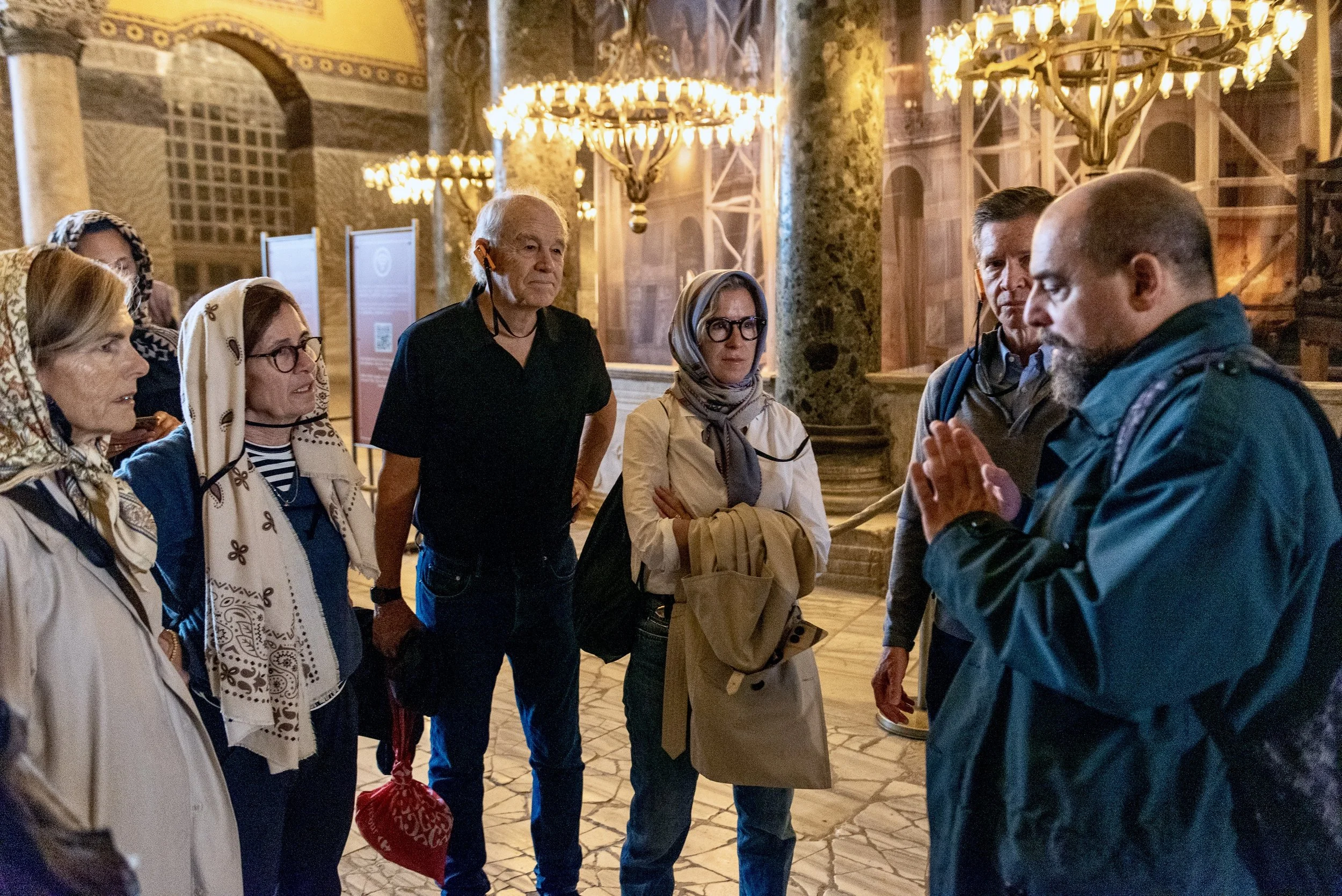
Understanding the evolution of the Hagia Sophia from 6th-century Byzantine church to present-day mosque
Our latest session of World Religions in Istanbul examined how the city’s many faiths have coexisted over the centuries, through periods of both tolerance and persecution, and what that coexistence has looked like in practice. The course explored how the Ottoman state welcomed religious minorities and the role those minorities played in its commerce, diplomacy, and civic life; how buildings passed from one faith to another, and what those conversions reveal; the relationship between Islam’s institutional and mystical traditions; and the place of the city’s Greek Orthodox, Armenian, and Jewish populations in earlier times, along with their continued, though much smaller, presence today. The cohort came away understanding Istanbul as a place of thousands of years of religious diversity that is still evident throughout the city today.
Field Seminars
Learning about Sufi mysticism at the Galata Mevlevi Lodge
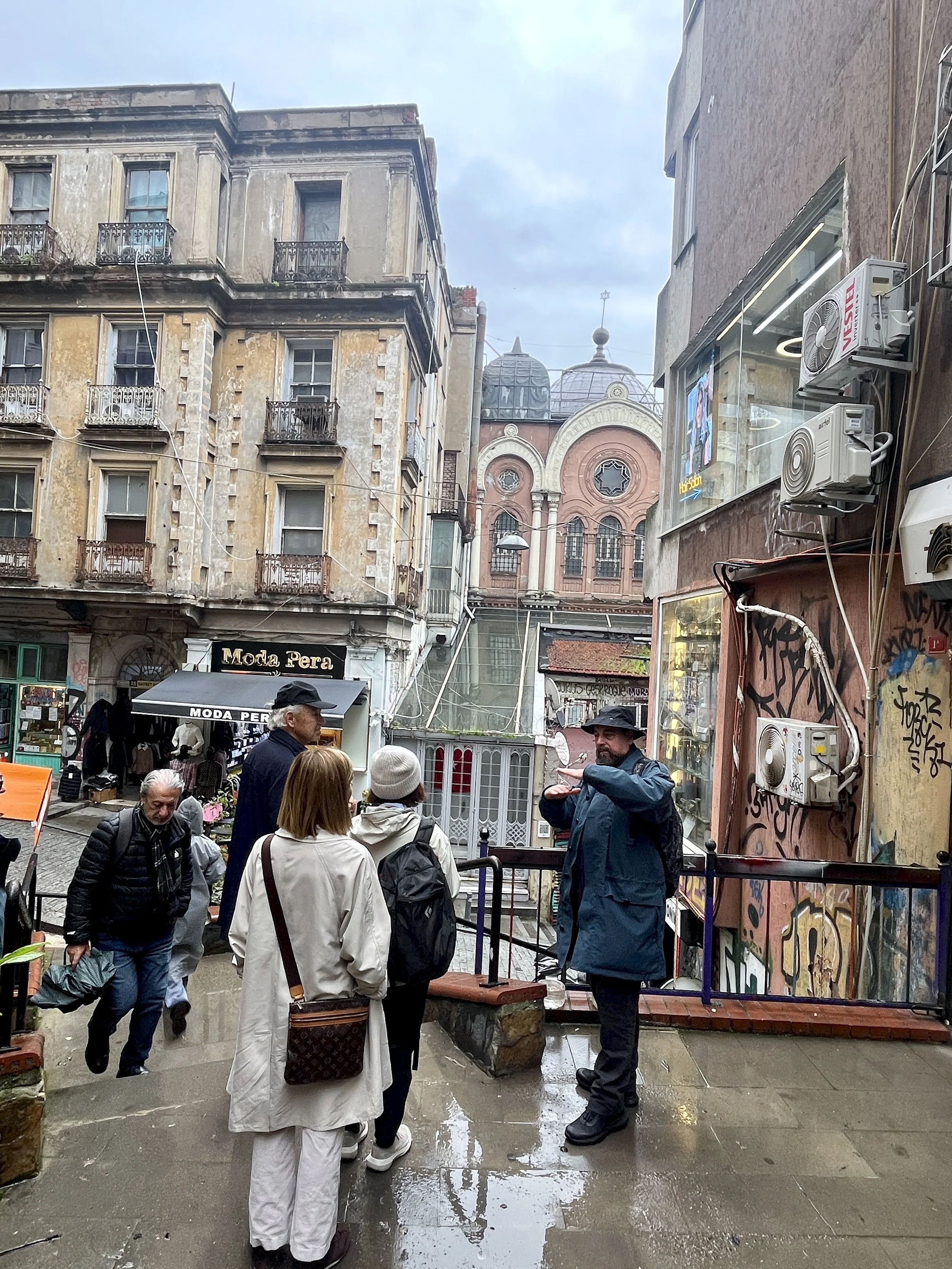
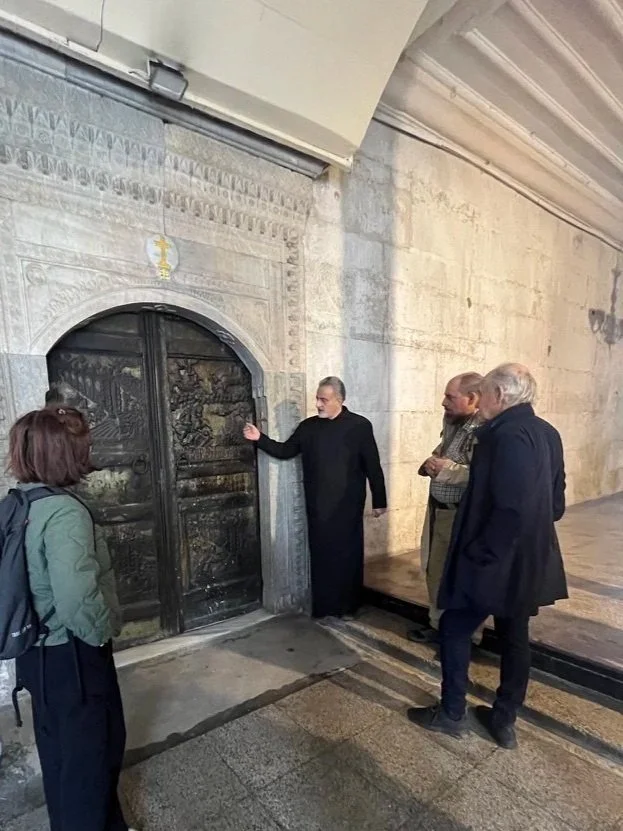
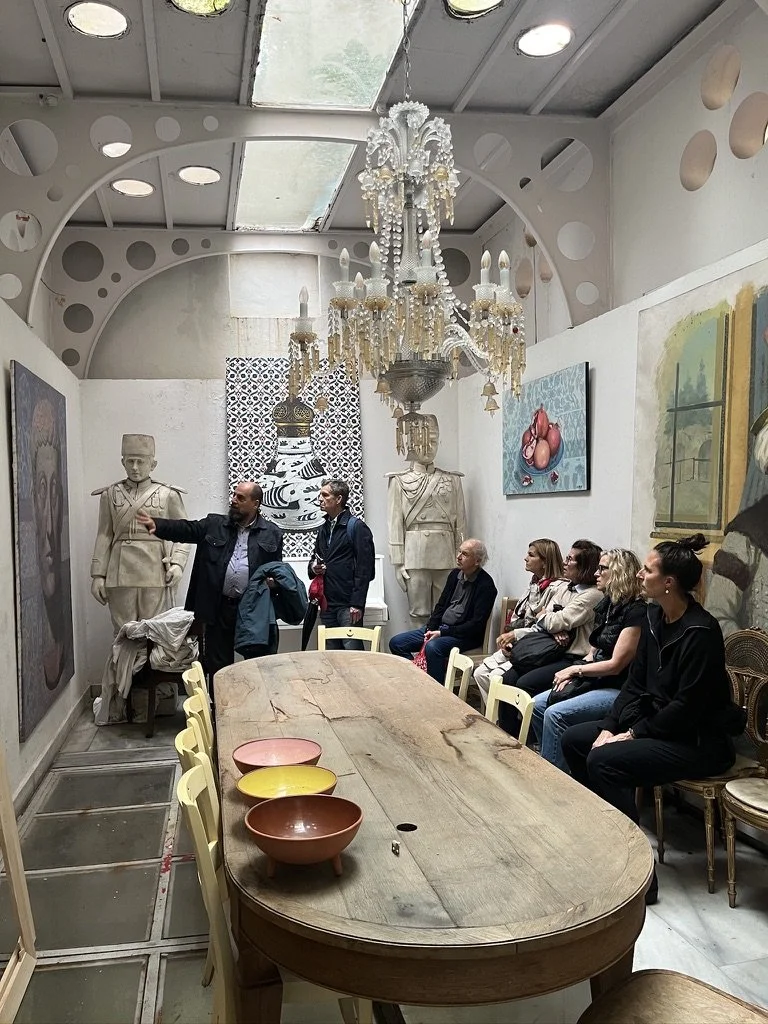
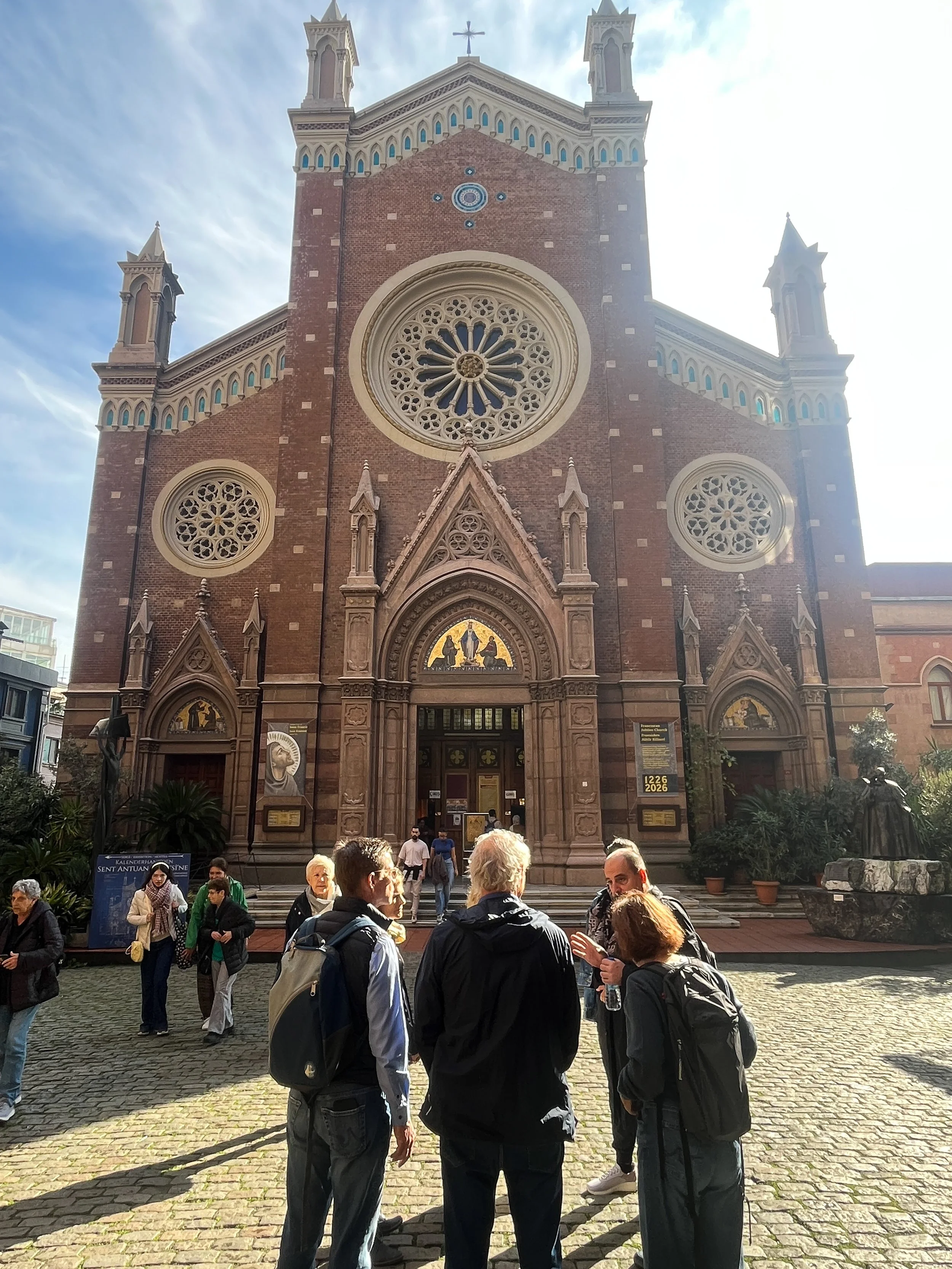
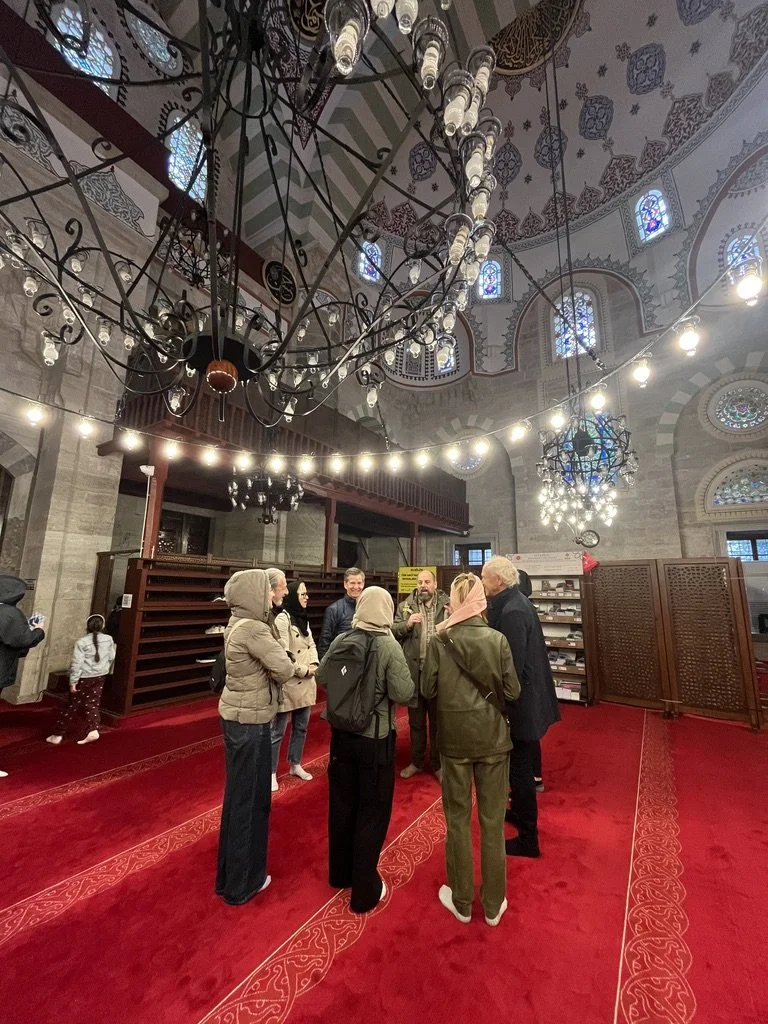
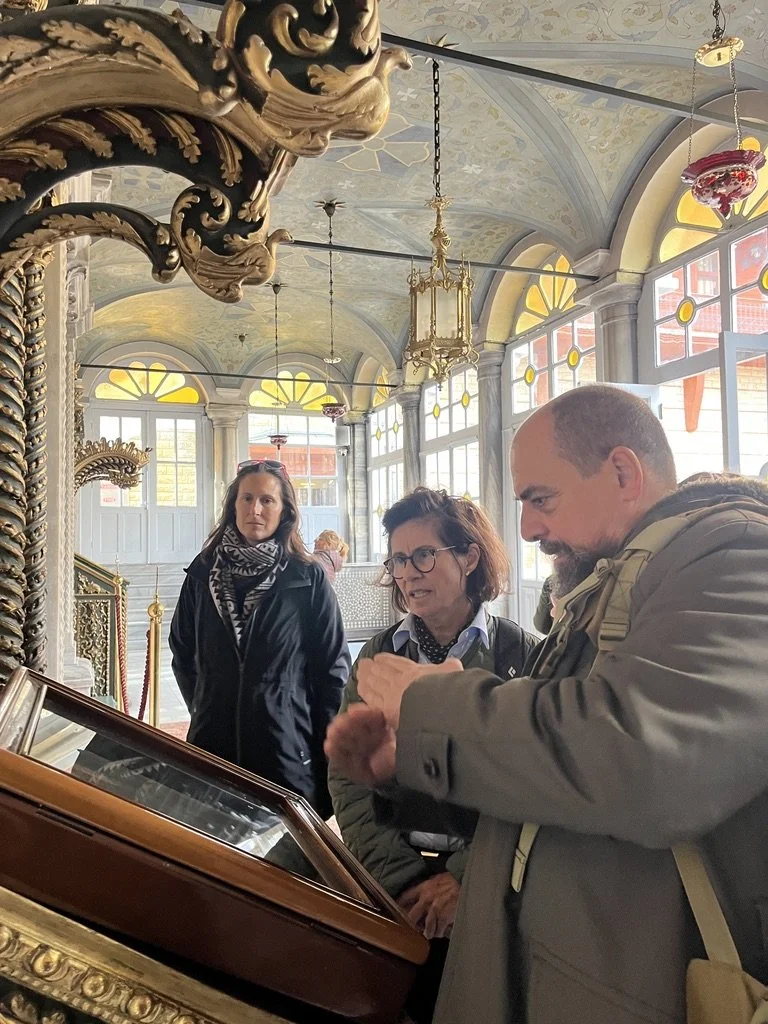
The course was taught by Emre Öktem, a professor of international law specializing in minority and religious rights, who drew on both his scholarship and his personal connections to leaders of a variety of religious communities. Seminar visits pictured here, clockwise from top left, included the Ashkenazi Synagogue in Galata, built with Austro-Hungarian funds as a sign of the Ottoman state’s ties with foreign powers; the Armenian Church of Surp Hreshdagabet in Balat, where the priest personally showed the cohort the church and its ancient iron door; the Catholic Church of St. Anthony, built for the European communities around the embassies of Pera; and an artist’s studio in Galata with a mikveh, a Jewish ritual bath, preserved in its basement.
Daily Discussions
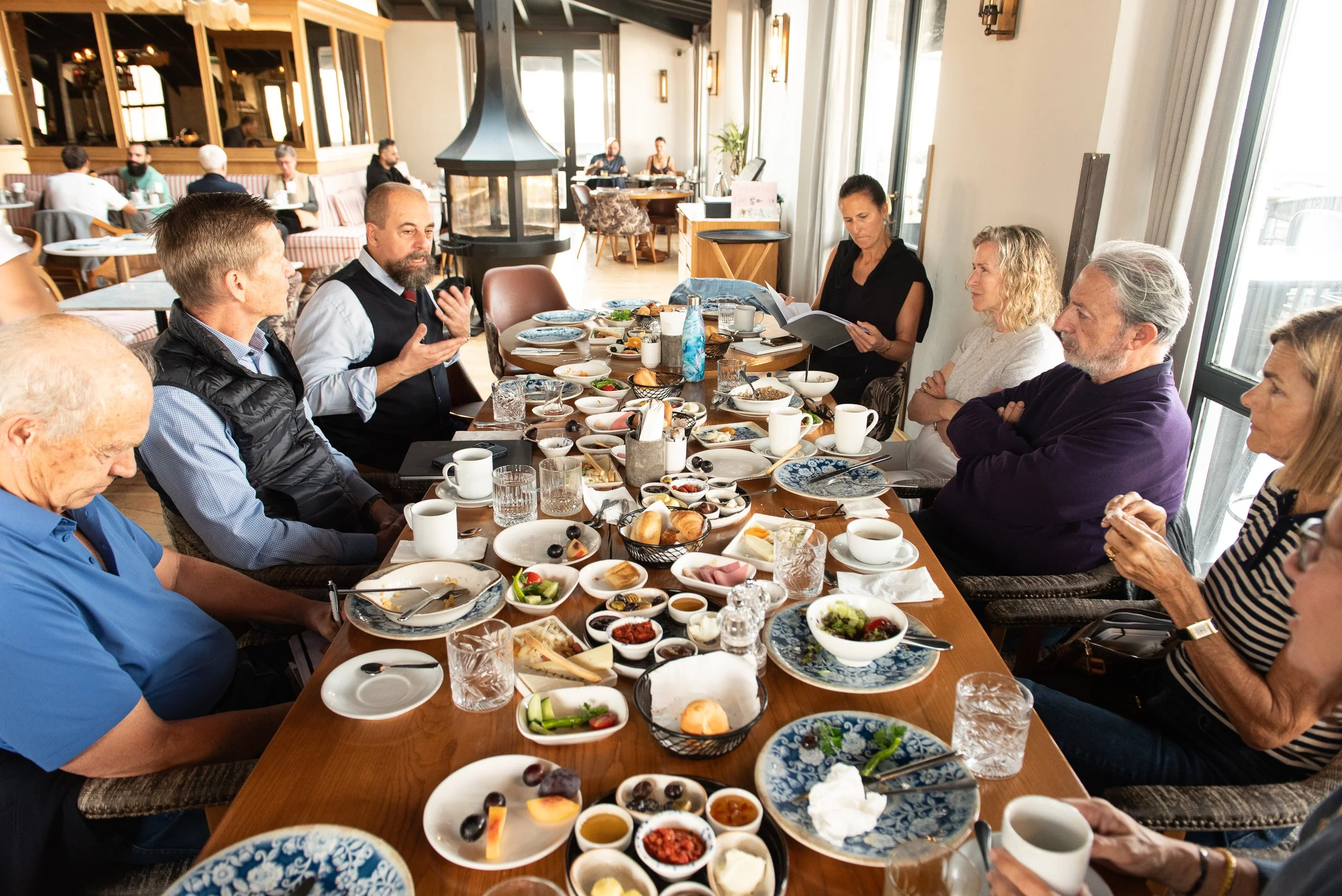
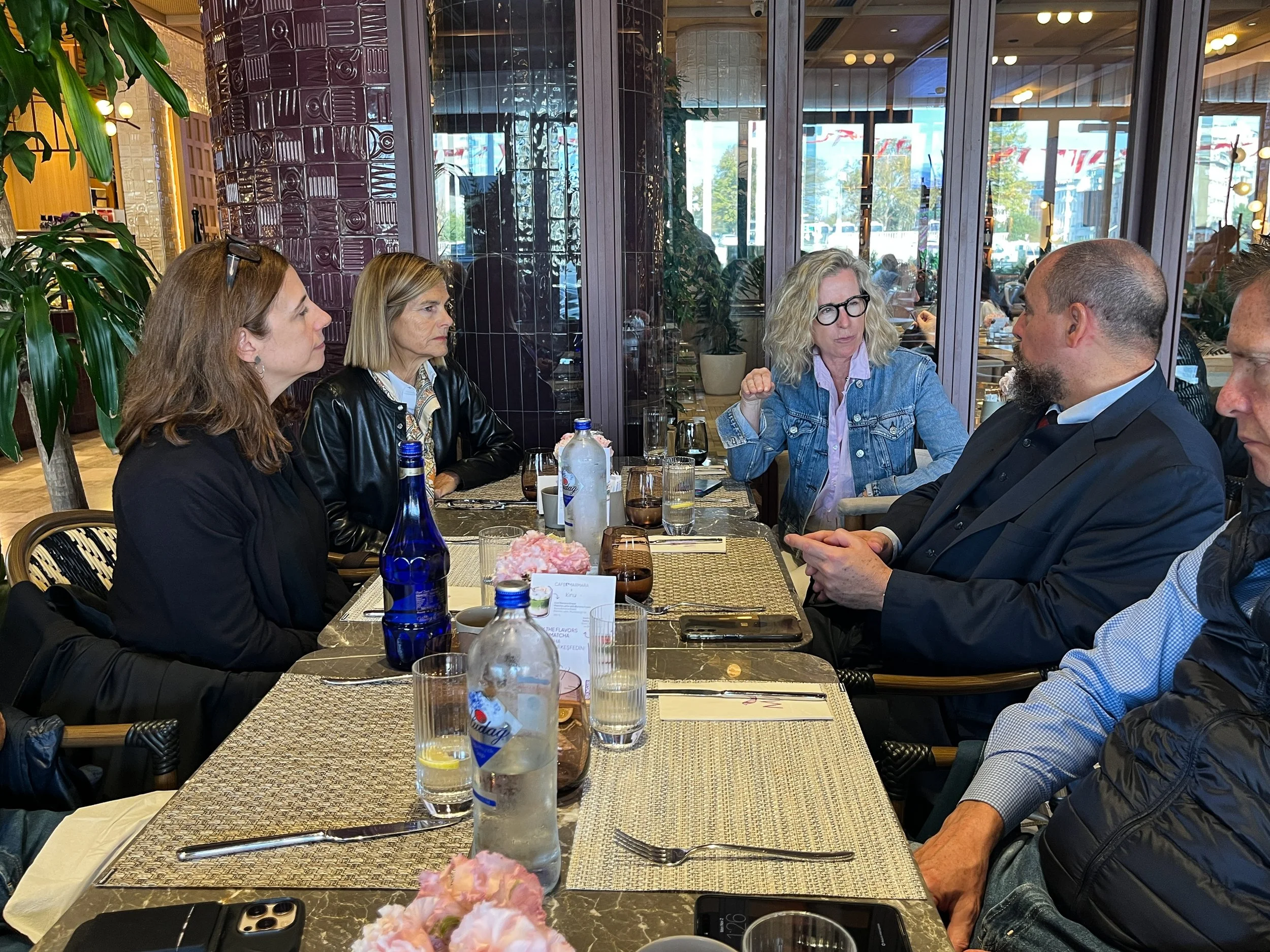
Each morning began with a discussion over a traditional Turkish breakfast at the hotel: eggs, olives, cheeses, tomatoes and cucumbers, honey, jams, and simit, a sesame-crusted cousin of the bagel that quickly became a cohort favorite. Students compared notes on the previous afternoon’s Self-Guided Study, and Emre introduced questions related to the day’s Field Seminar. The conversation often carried on over lunch and, in the evenings, at the wine bar around the corner from the hotel, where the cohort became regulars.
Connecting with the Cohort
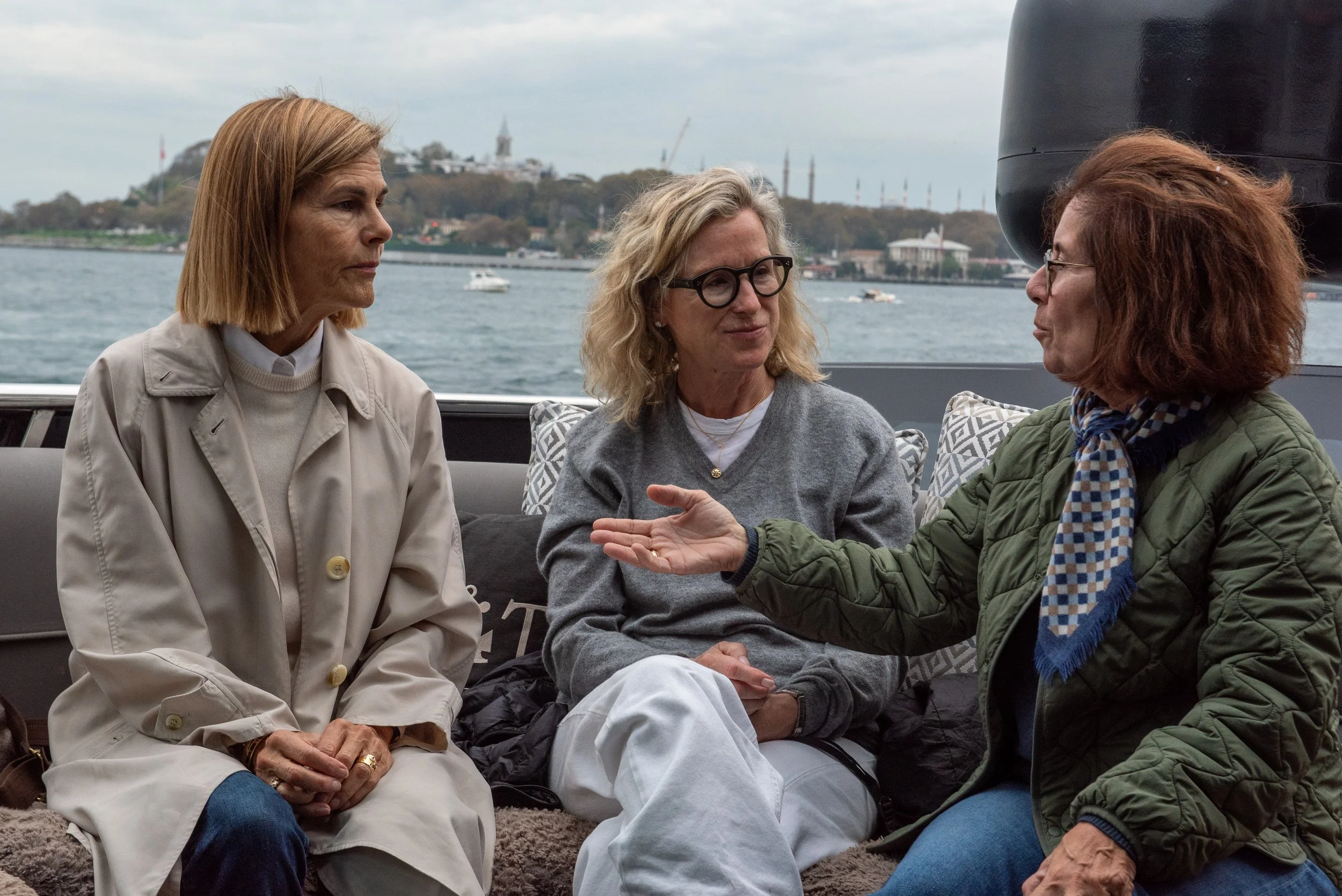
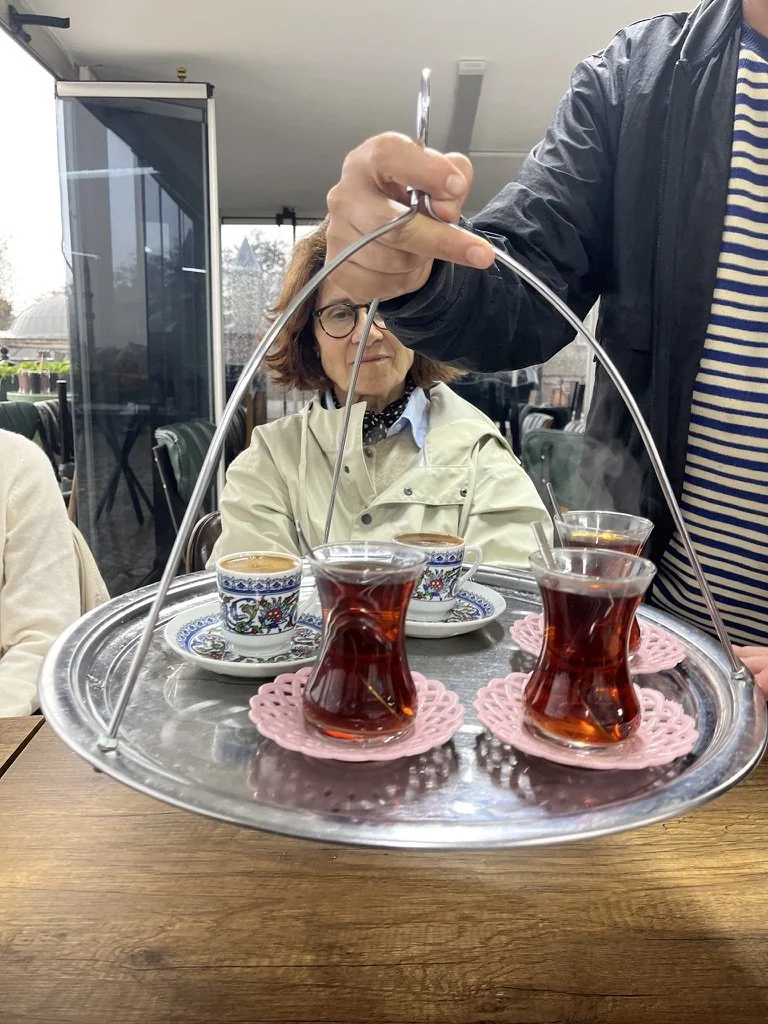
Between seminars, members of the cohort often explored the city together, taking advantage of Istanbul’s countless cafés and restaurants, many with a view of the Bosphorus. Optional extracurriculars included a boat tour of the Bosphorus, between Istanbul’s European and Asian shores, and a guided visit to the Grand Bazaar that ended with traditional Turkish tea and coffee on the bazaar’s roof.
More highlights from the week in Istanbul
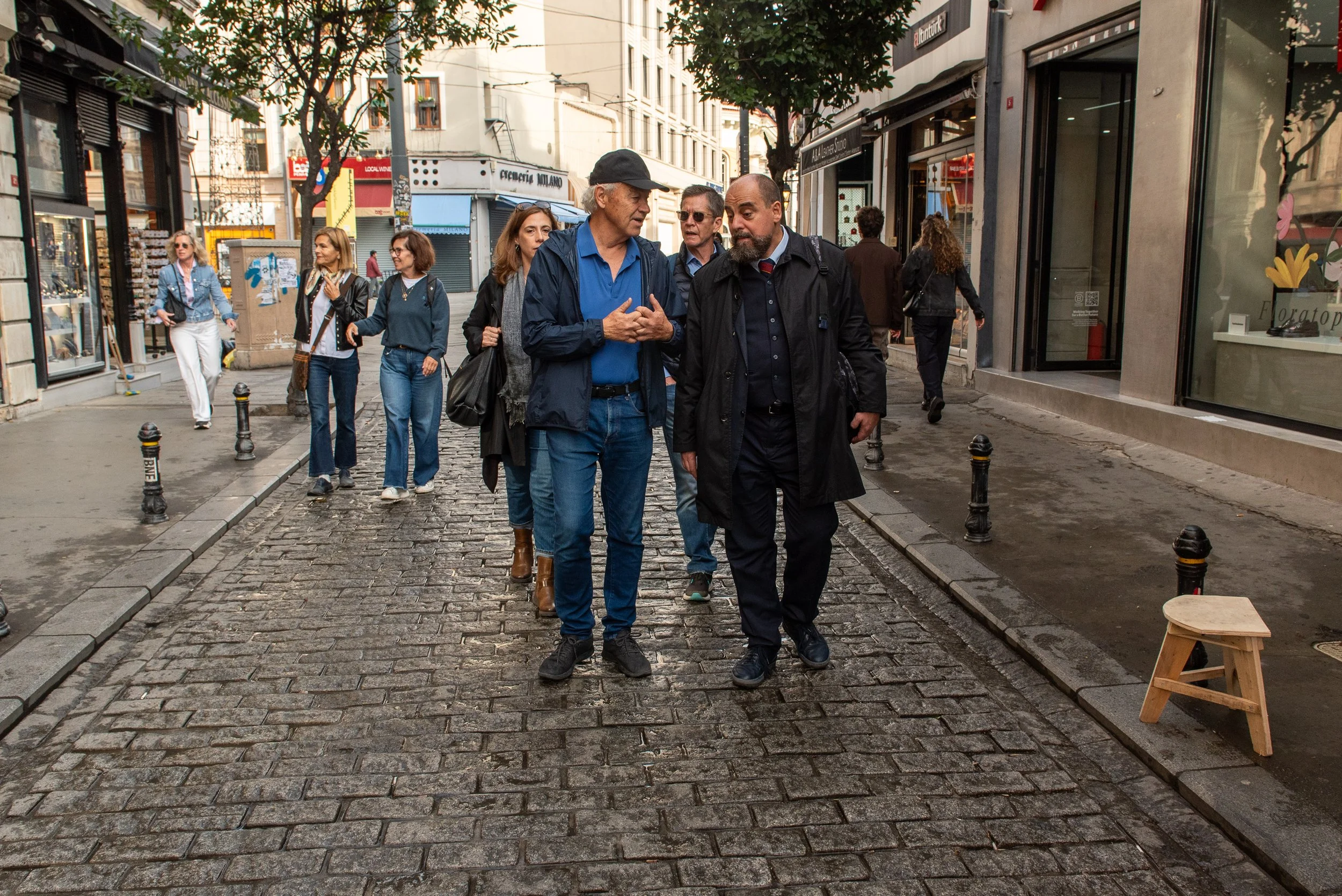
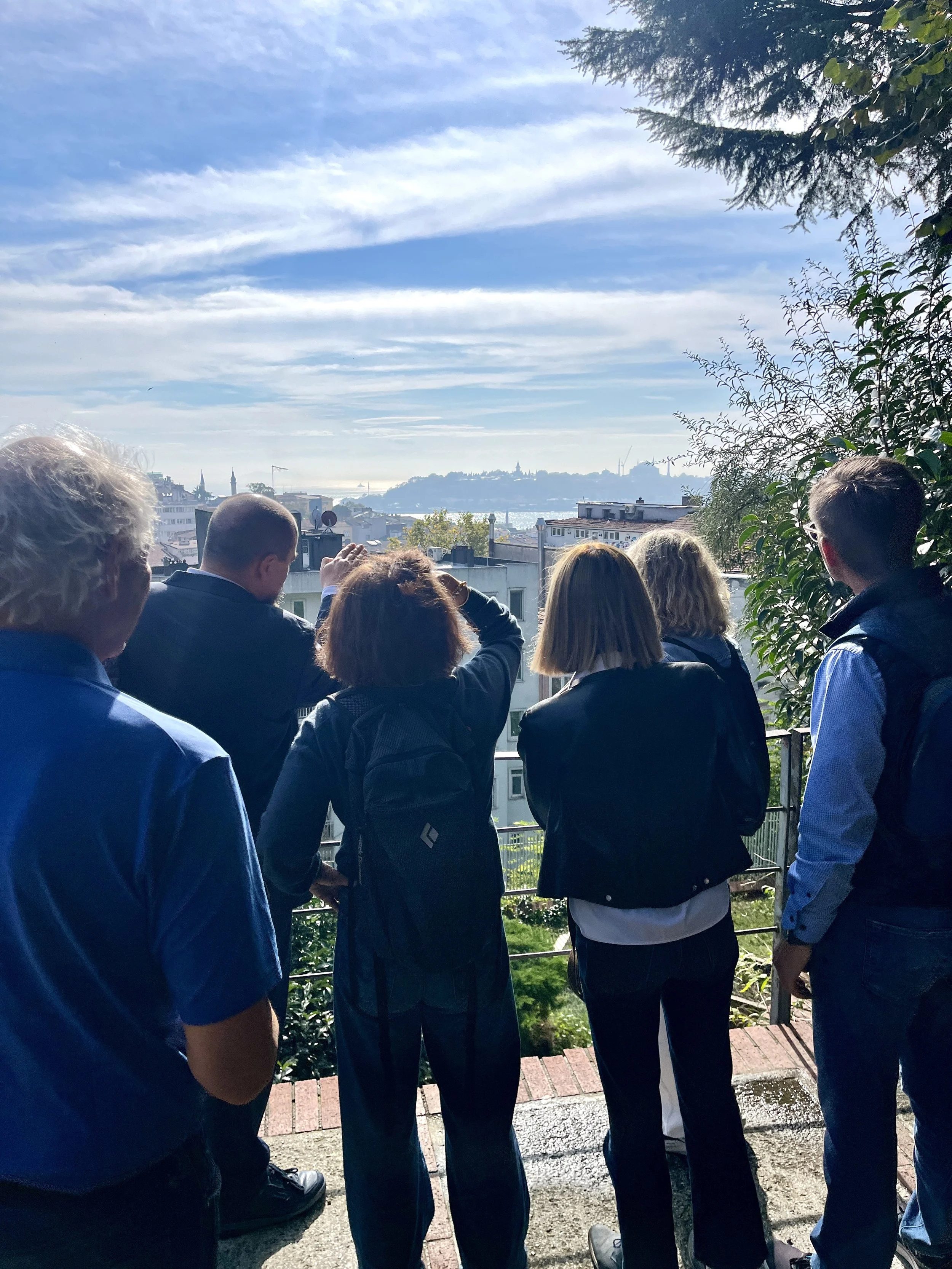
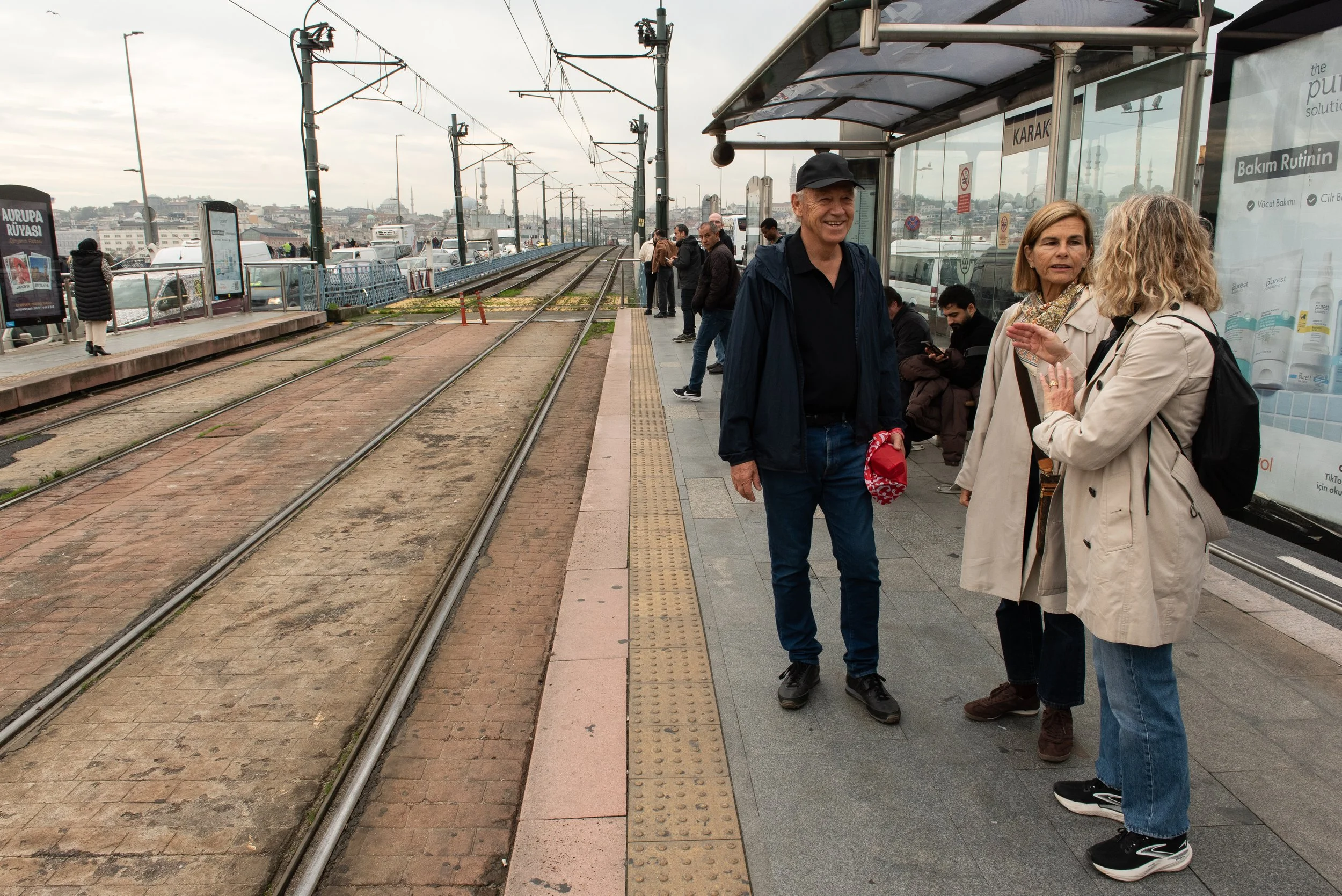
The cohort explored a variety of neighborhoods, both during Field Seminars and independently