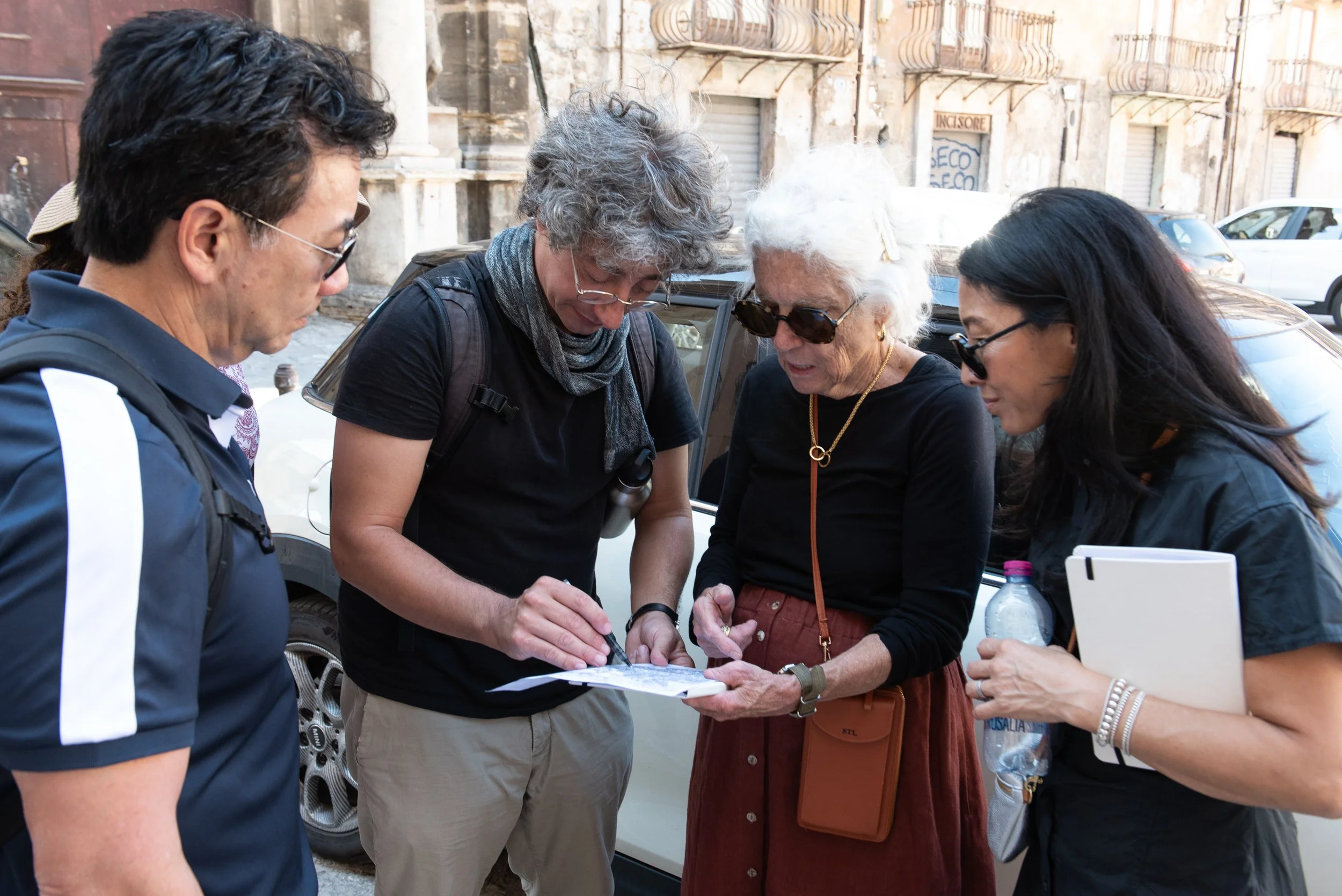
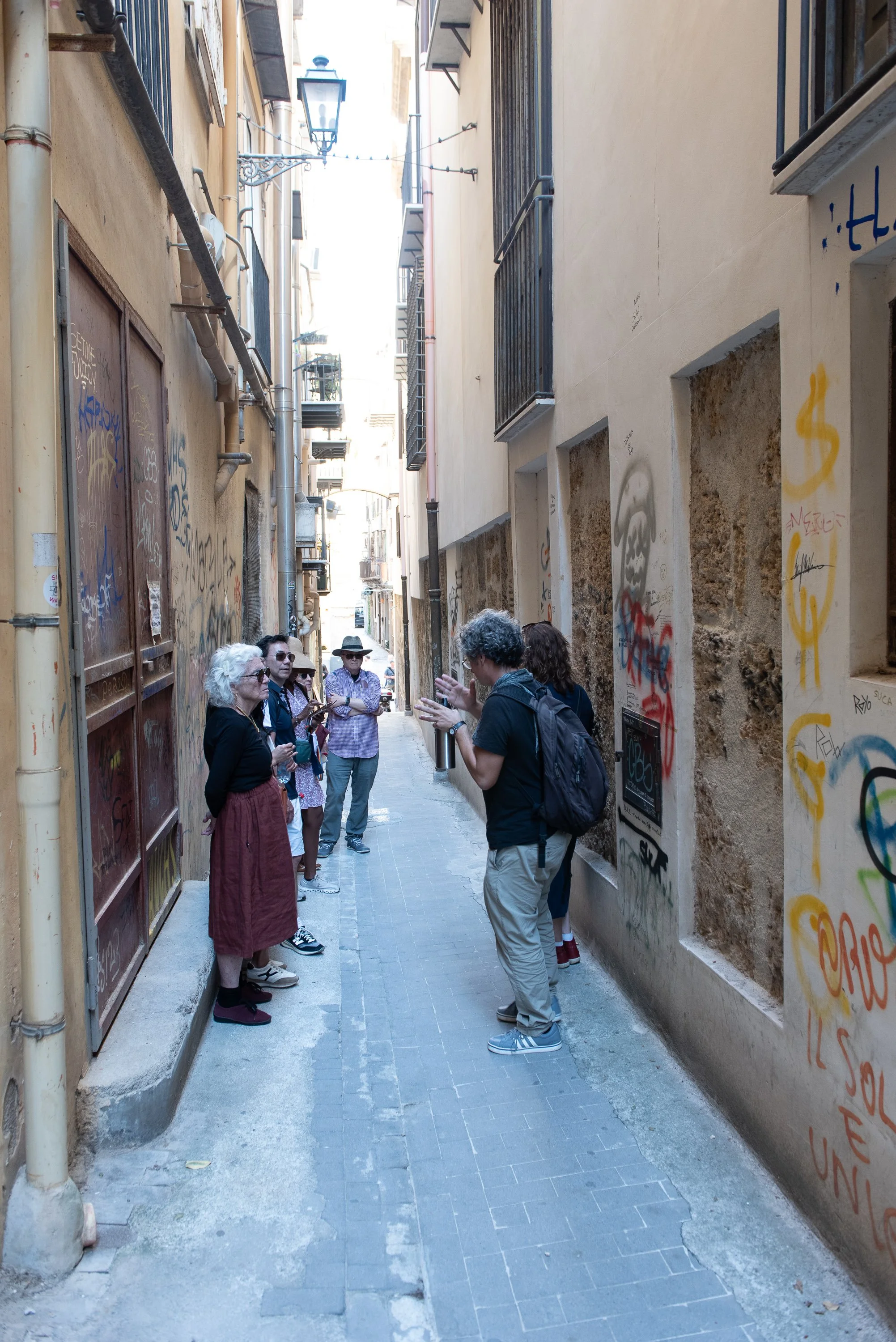
Using clues in the modern city to deduce where an ancient road once ran
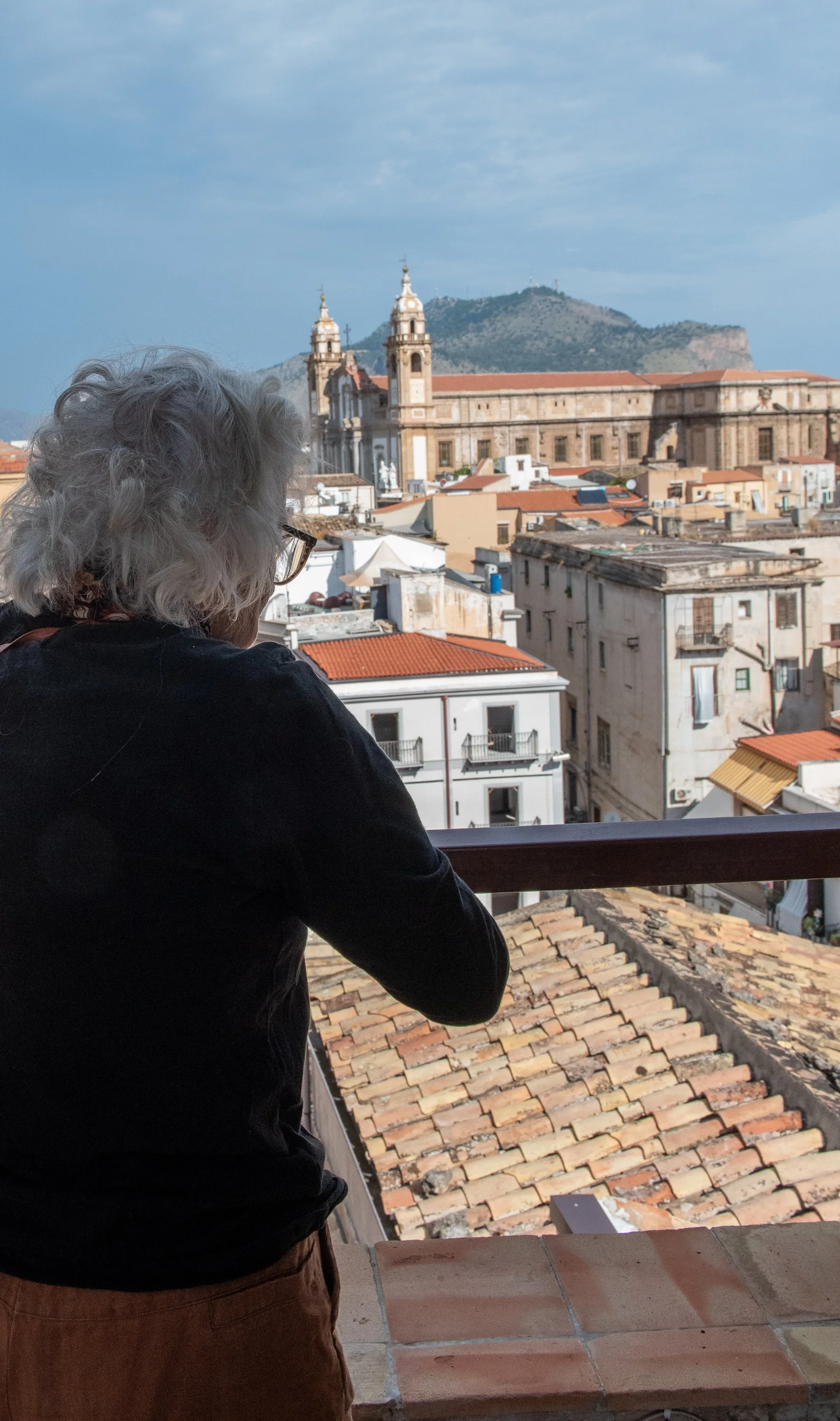
Our recent course in Palermo explored how a city takes shape and keeps changing. Palermo is a palimpsest, each era written over the last without fully erasing it. Instructor Giuseppe Ferrarella, an architect, researcher, and native Palermitano, taught students how to look past a first impression to the layers beneath. They learned how streets, slopes, and thresholds record earlier phases of the city, how its port and waterways, its terrain, its cultivated landscapes, and its rituals around death shaped its growth, and how a city preserves traces of what has disappeared. They also learned to read other cities this way, so that they can recognize comparable patterns in their future travels and even in their hometowns.
Field Seminars
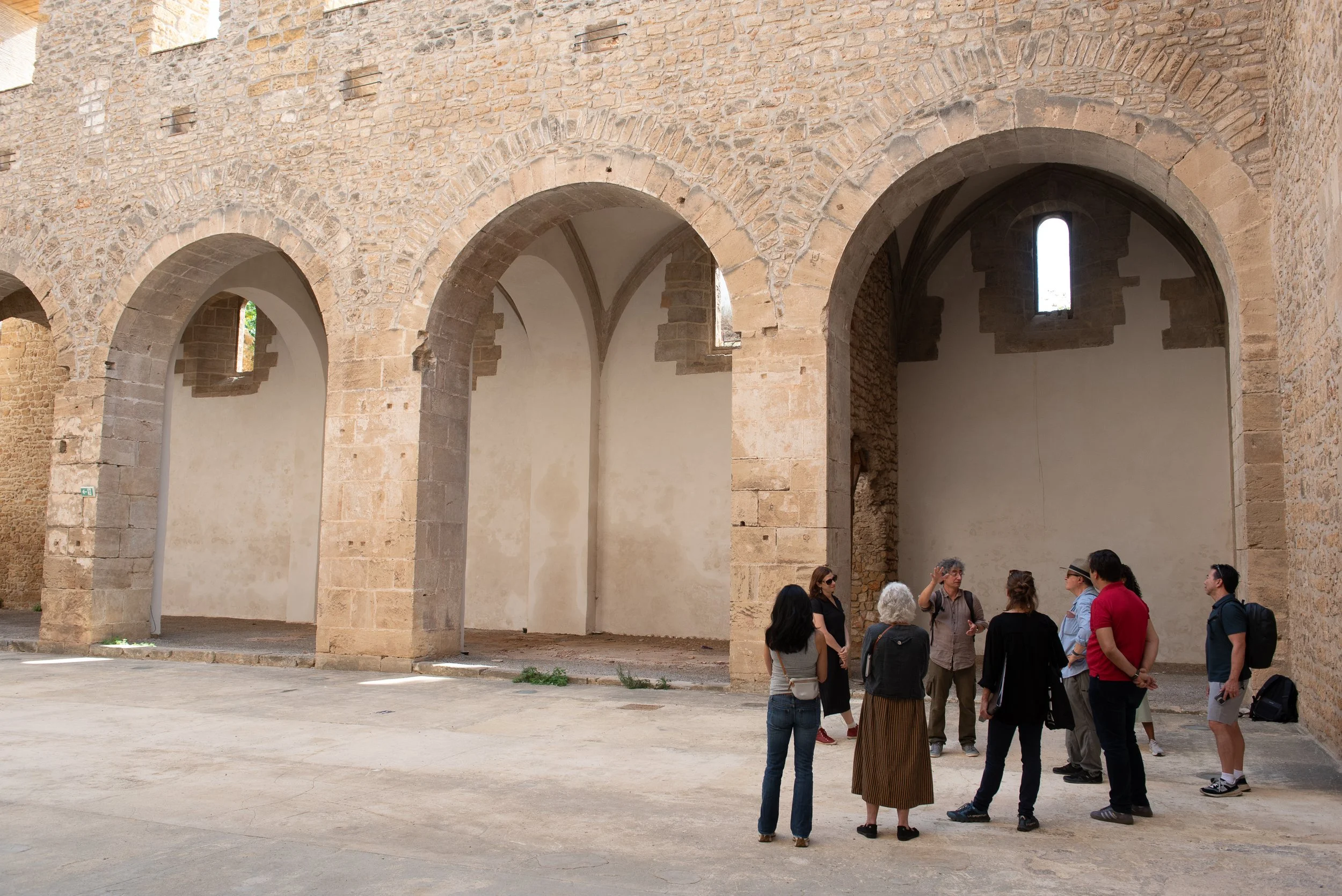
Exploring the unfinished church of Santa Maria dello Spasimo, whose southern wall was absorbed into a 16th-century city bastion
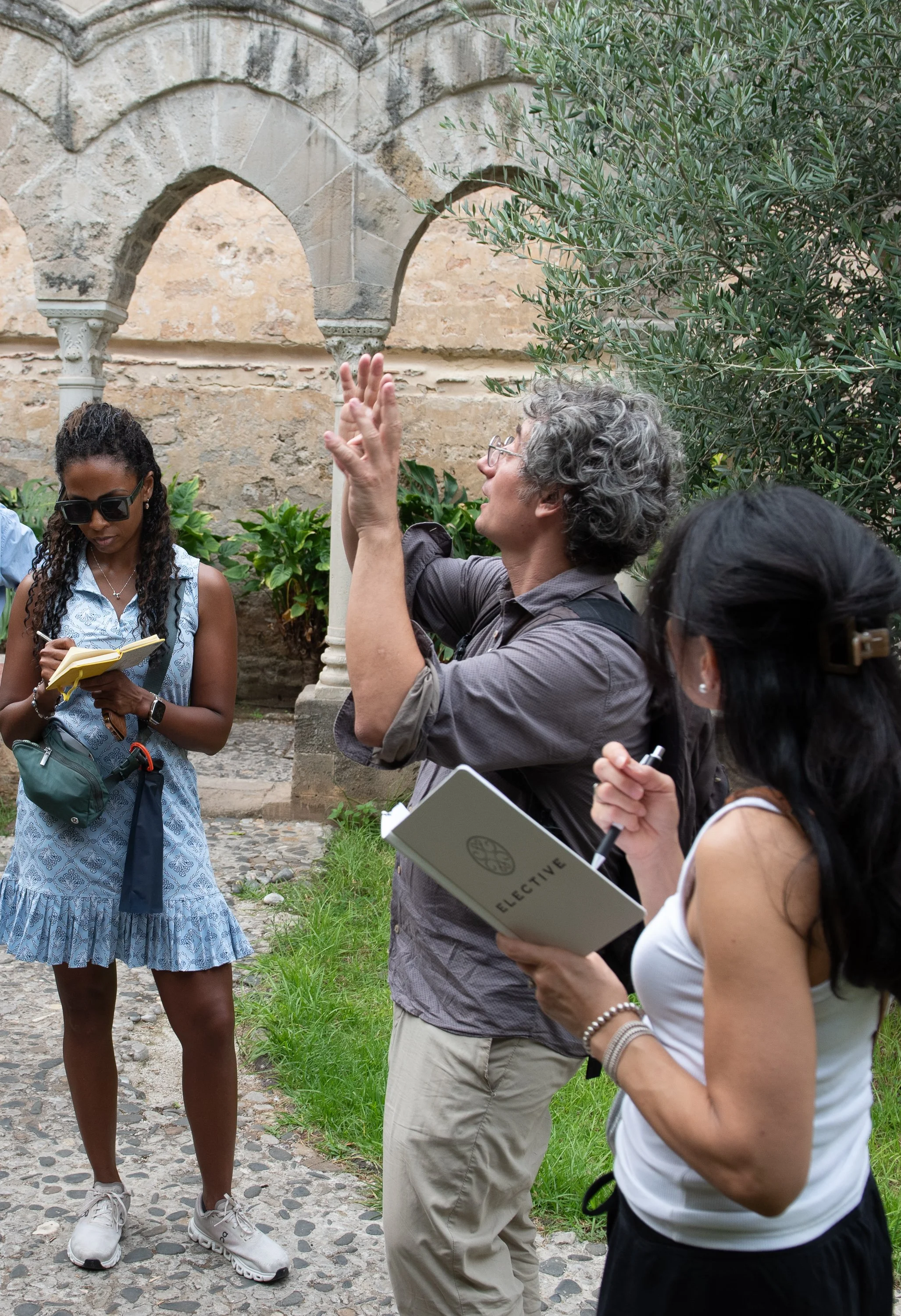
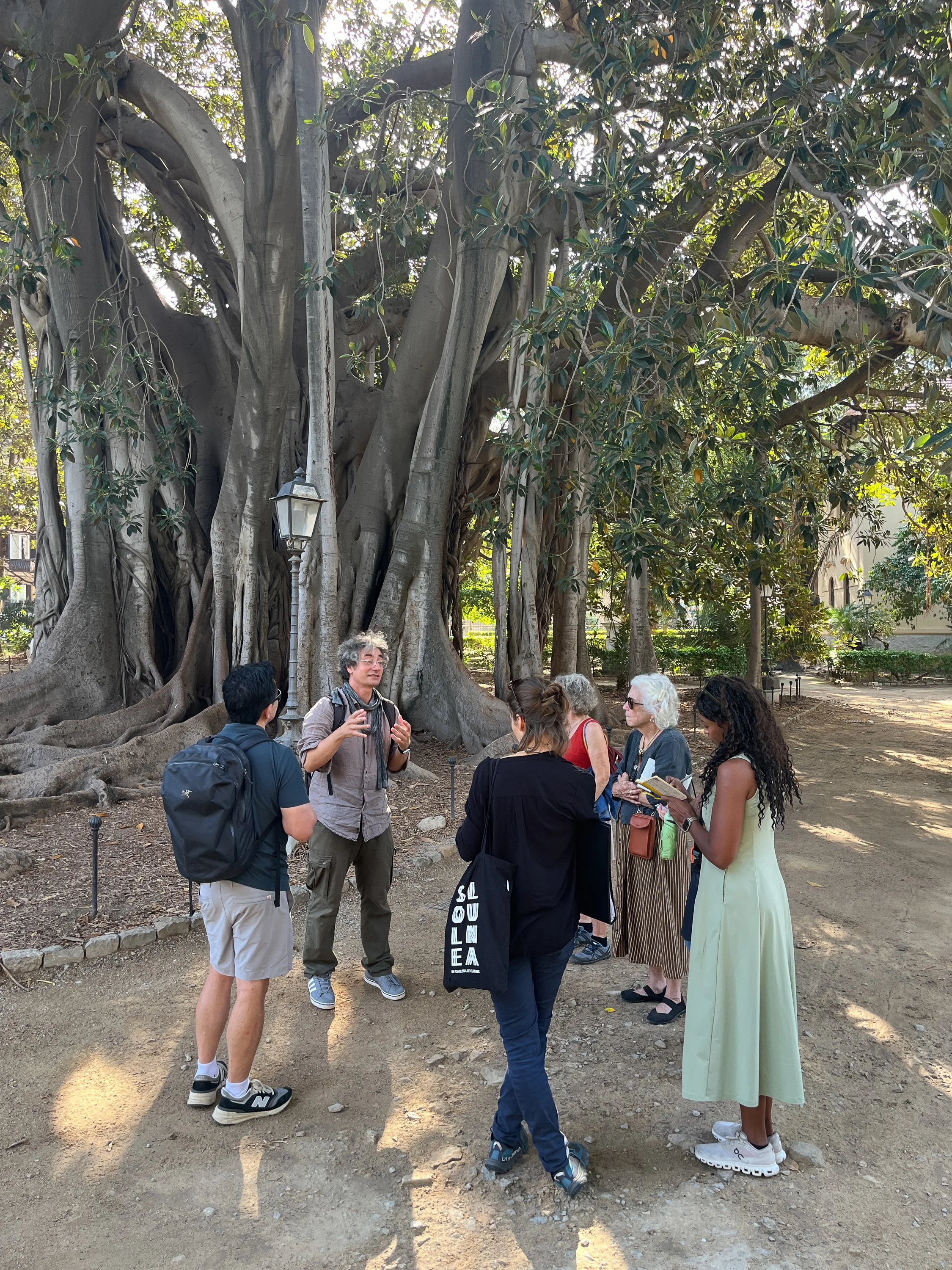
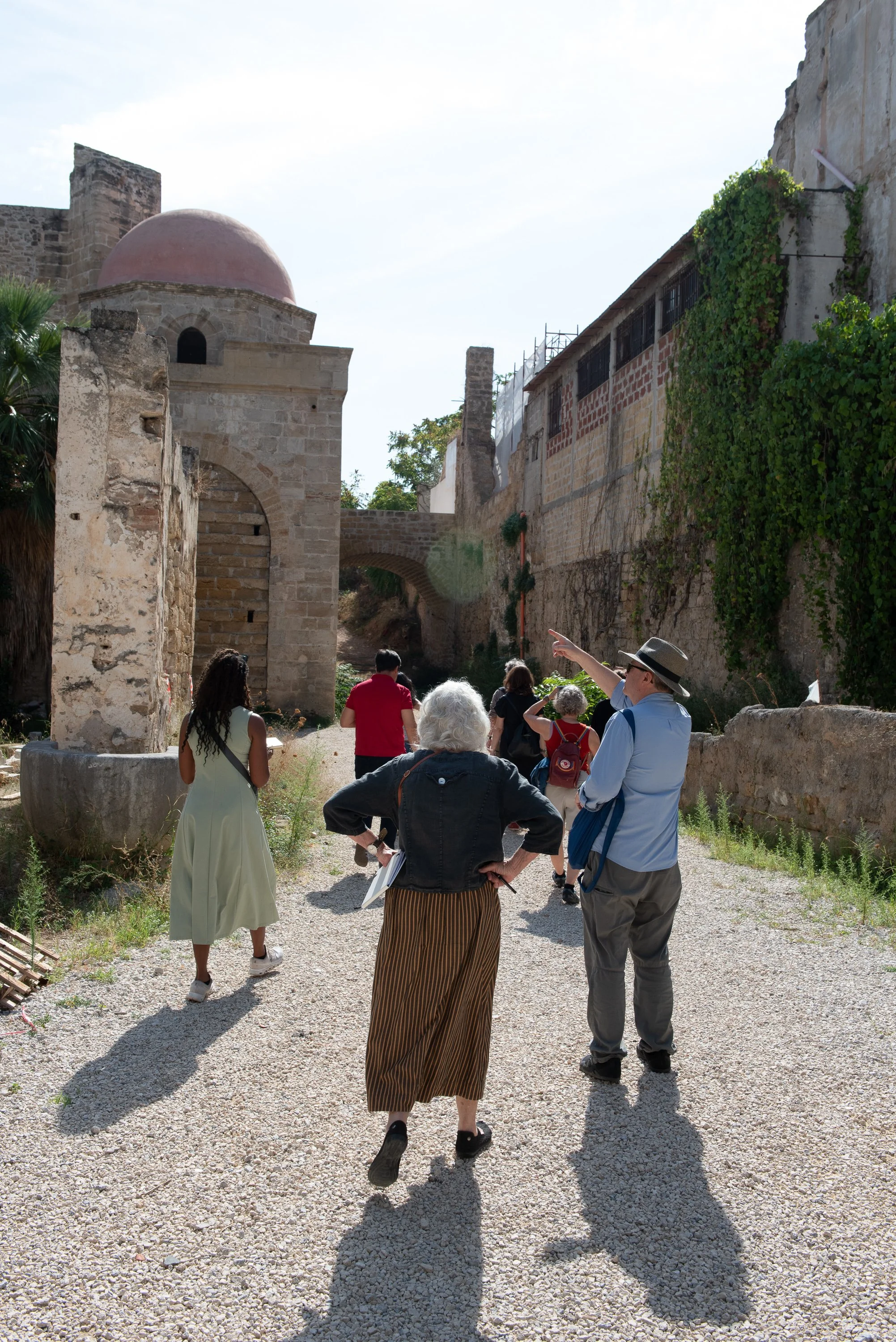
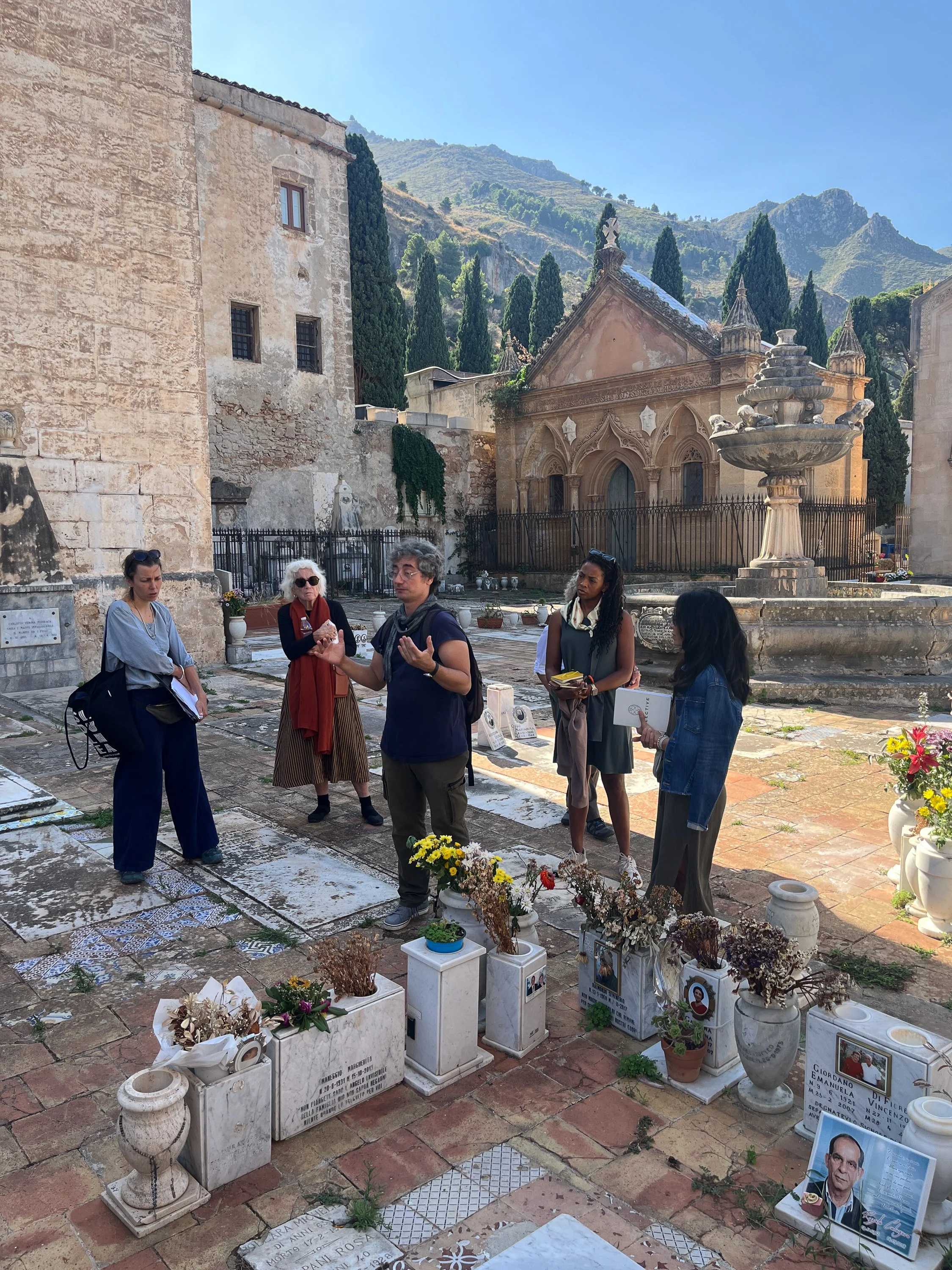
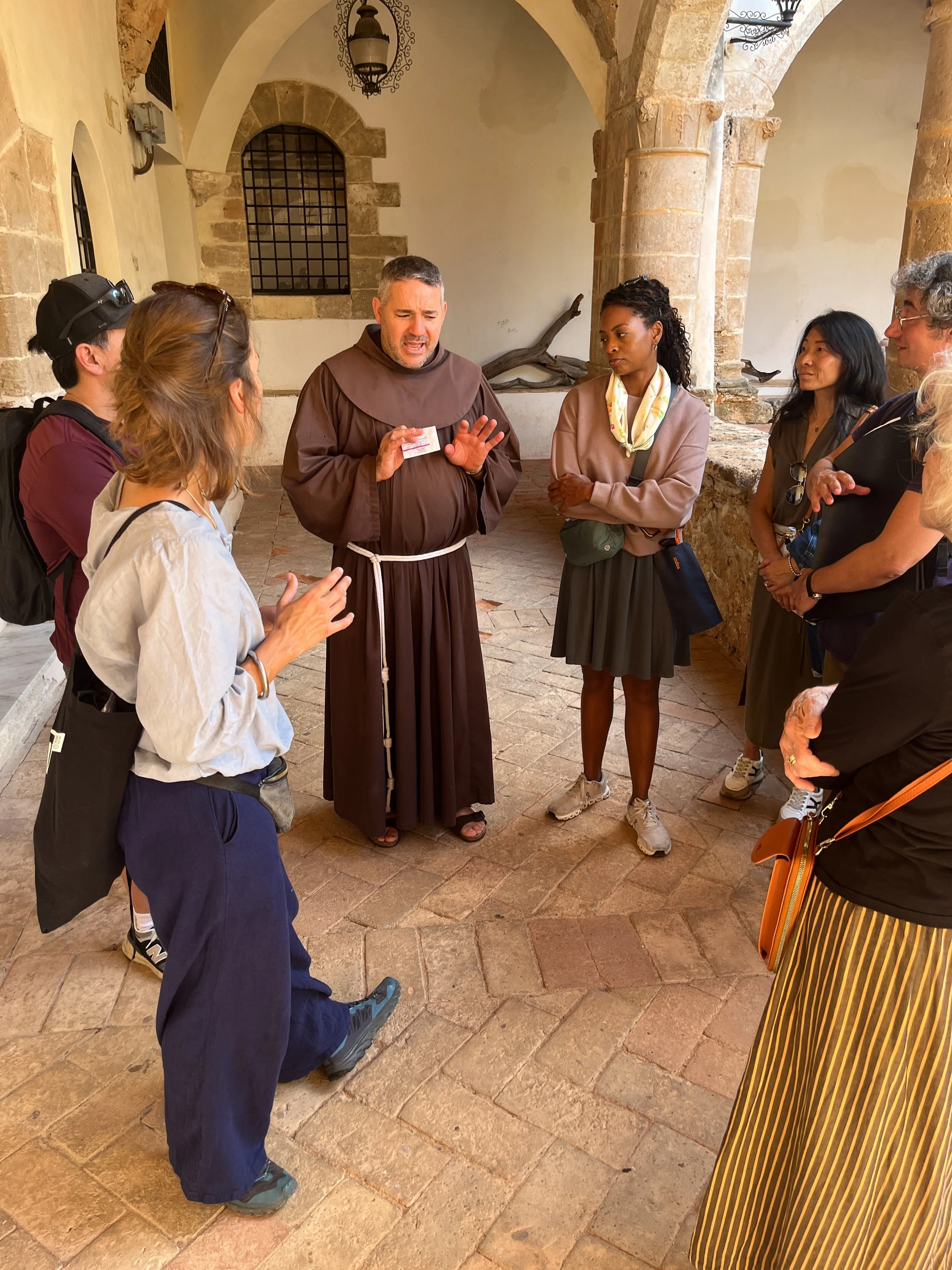
The Field Seminars took the cohort beyond Palermo’s familiar landmarks and into the layers of the city that are easy to miss or, in some cases, impossible to reach without special access. At the unfinished church of Santa Maria dello Spasimo, where open sky replaces the roof, students explored how Palermo’s past remains visible in its present. Other visits offered rarer perspectives. At the hillside convent of Santa Maria di Gesù, which overlooks the city, the cohort saw remains of San Benedetto il Moro, a 16th-century Franciscan saint deeply venerated in Palermo, that are not normally on display. In each seminar, students learned to identify in the city’s streets, buildings, and landscape the forces that shaped Palermo, and to recognize where its earlier incarnations persist within the modern city.
Daily Discussions
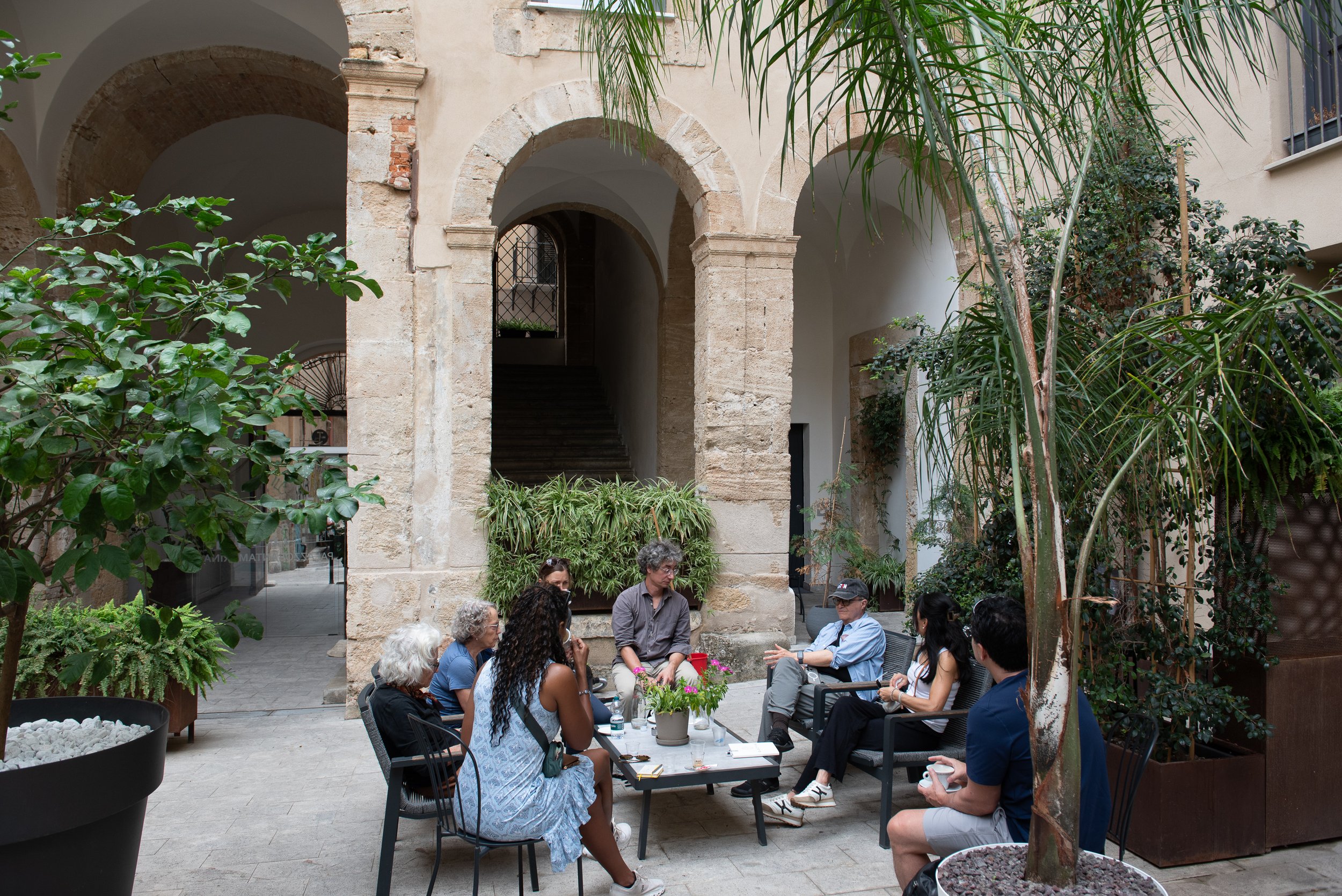
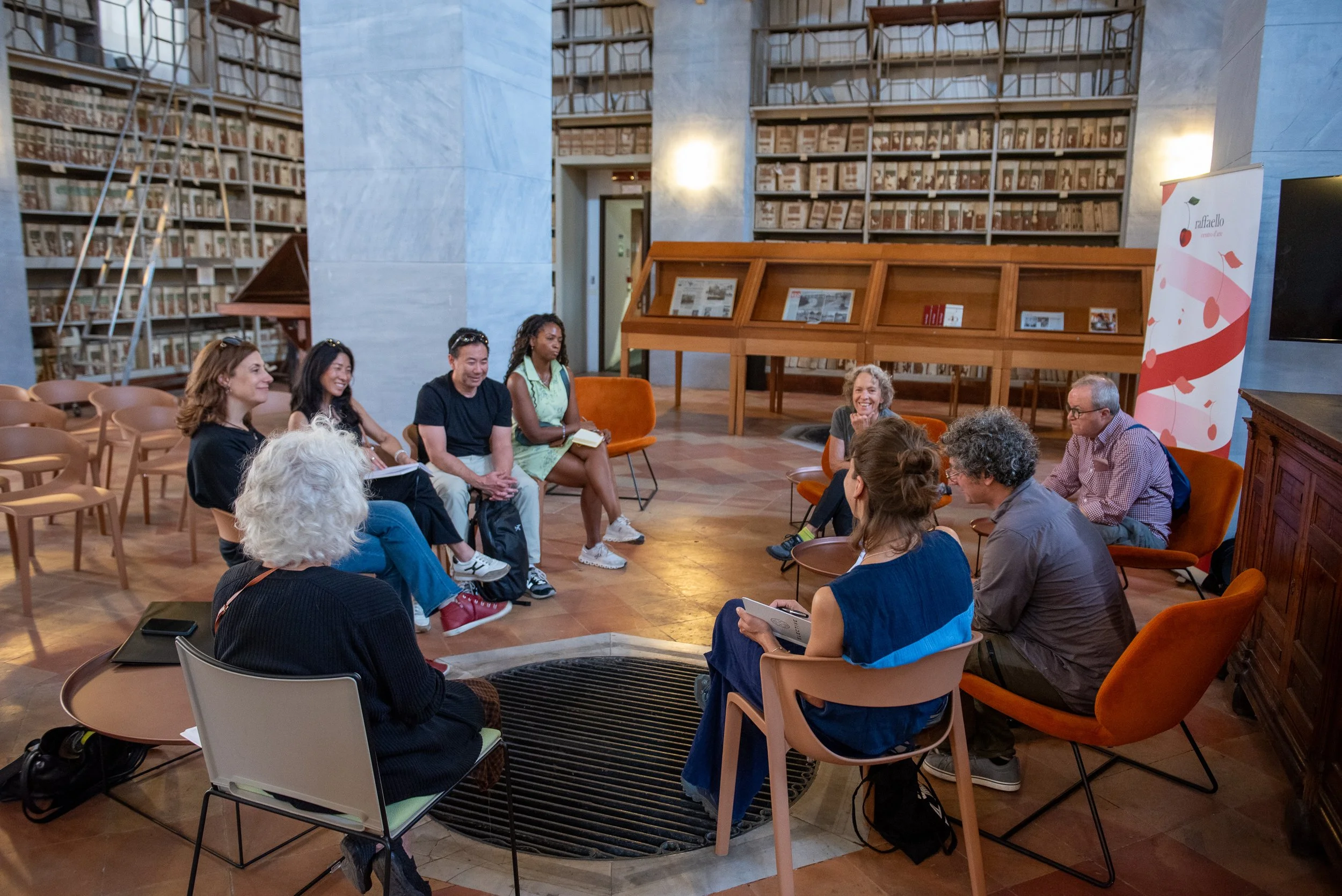
Each day began with a discussion at the hotel over coffee and breakfast, as a way to ease into the morning and to debrief the previous afternoon’s self-guided study. More conversations followed in the field, sometimes over a coffee break in a secluded piazza midway through a Seminar. The final day closed in the municipal archives, a grand building that is not open to the public and serves as the repository of Palermo’s memories, a fitting setting for the final Seminar, The City as Memory.
Connecting with the Cohort
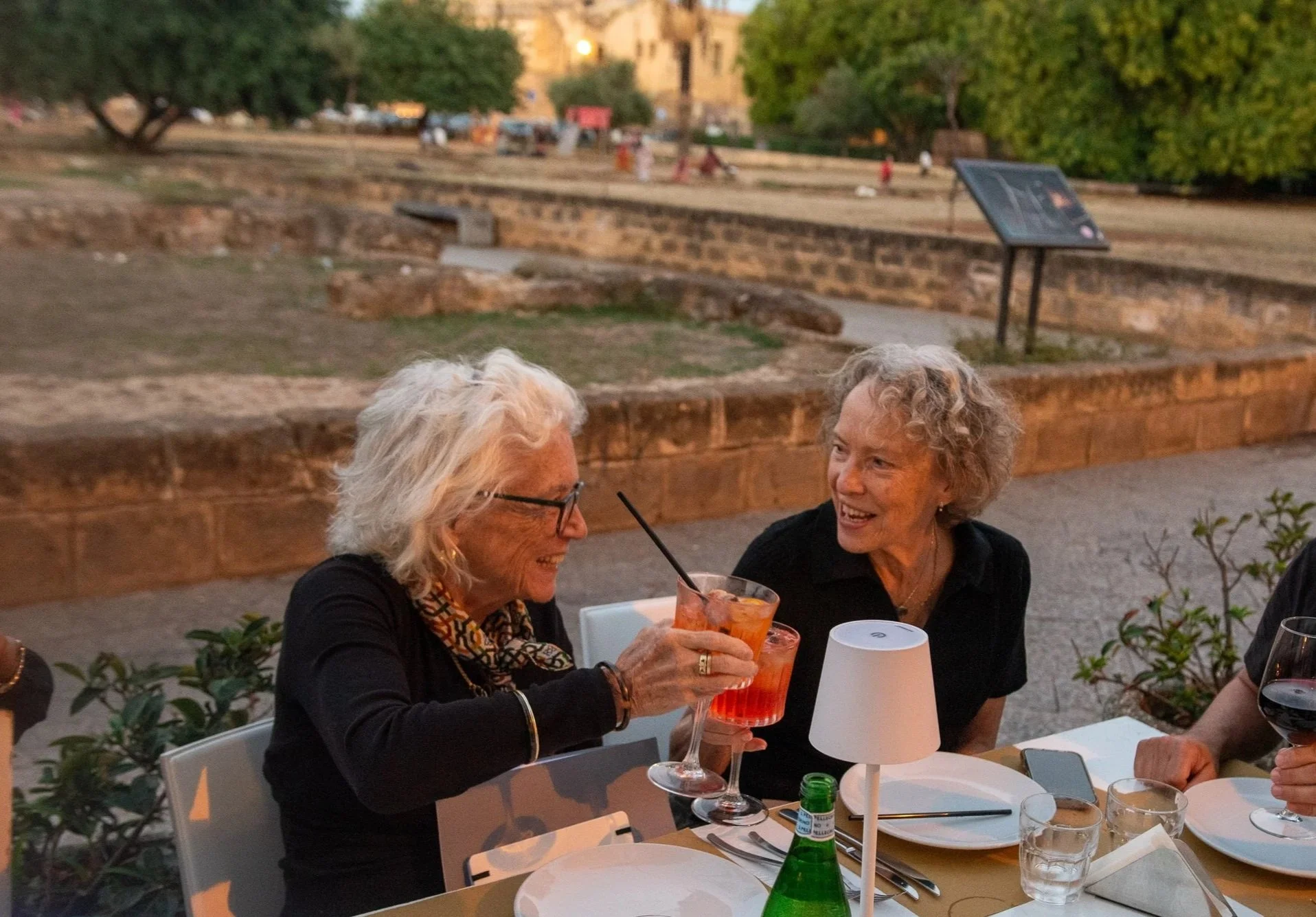
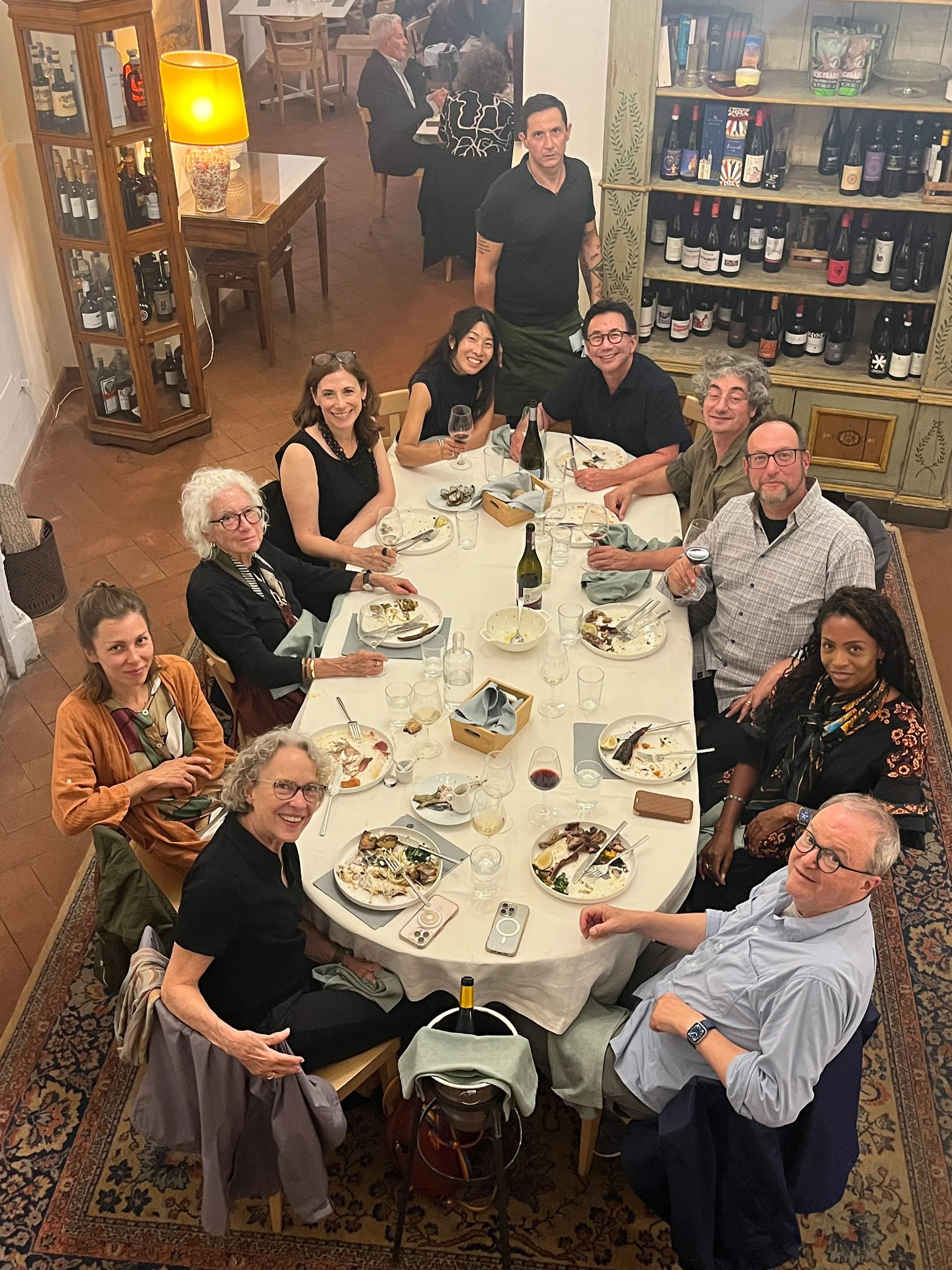
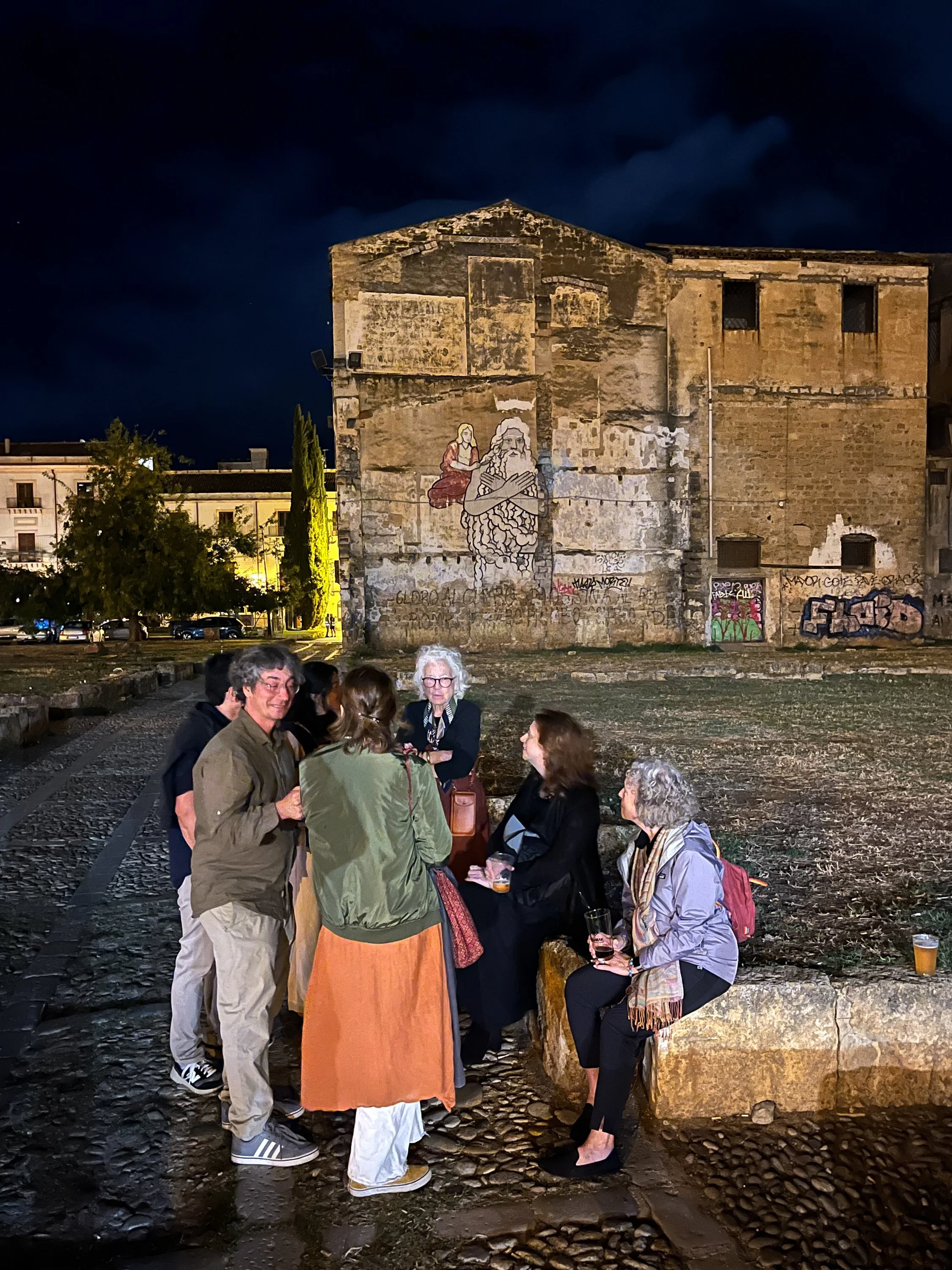
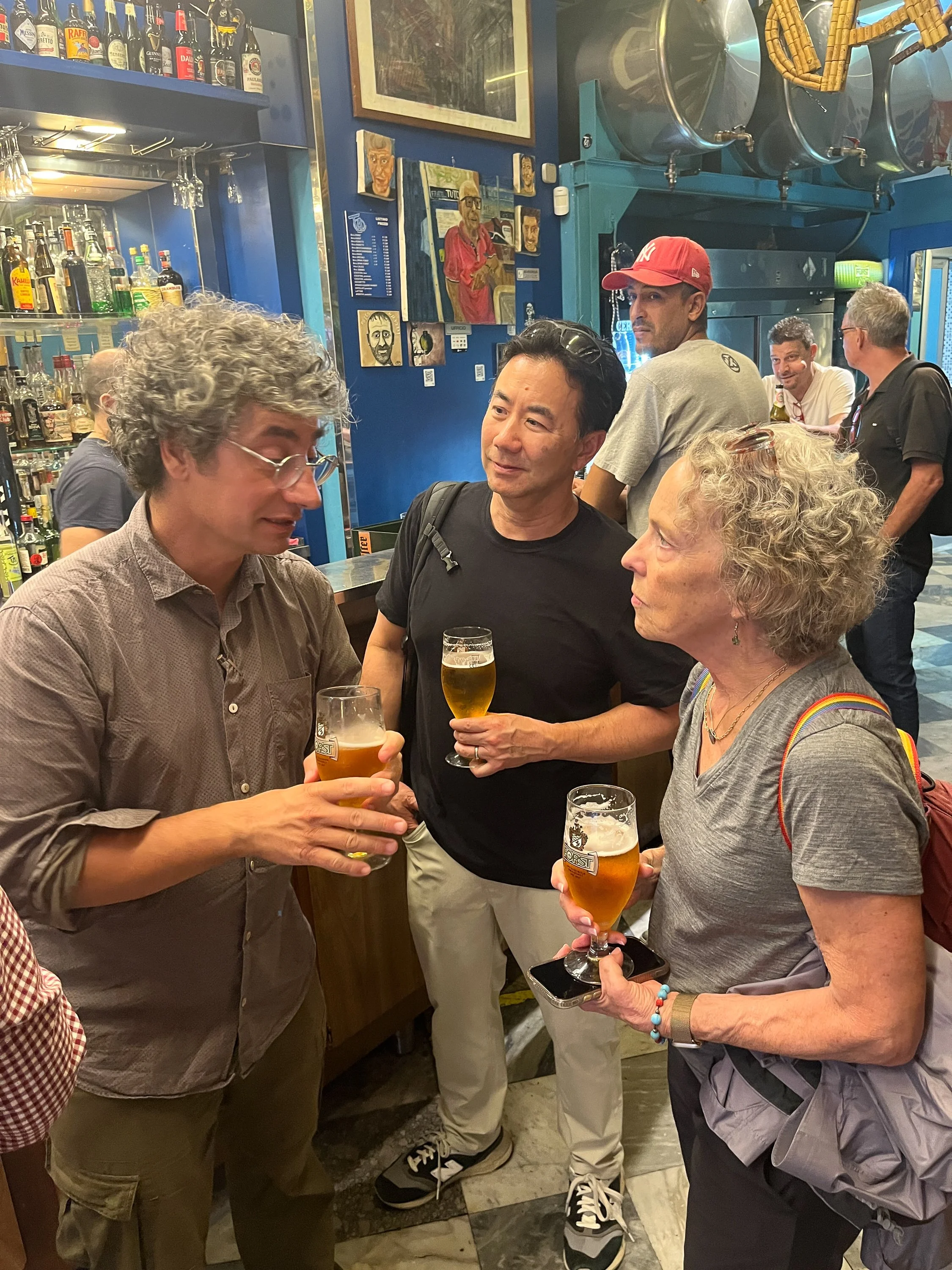
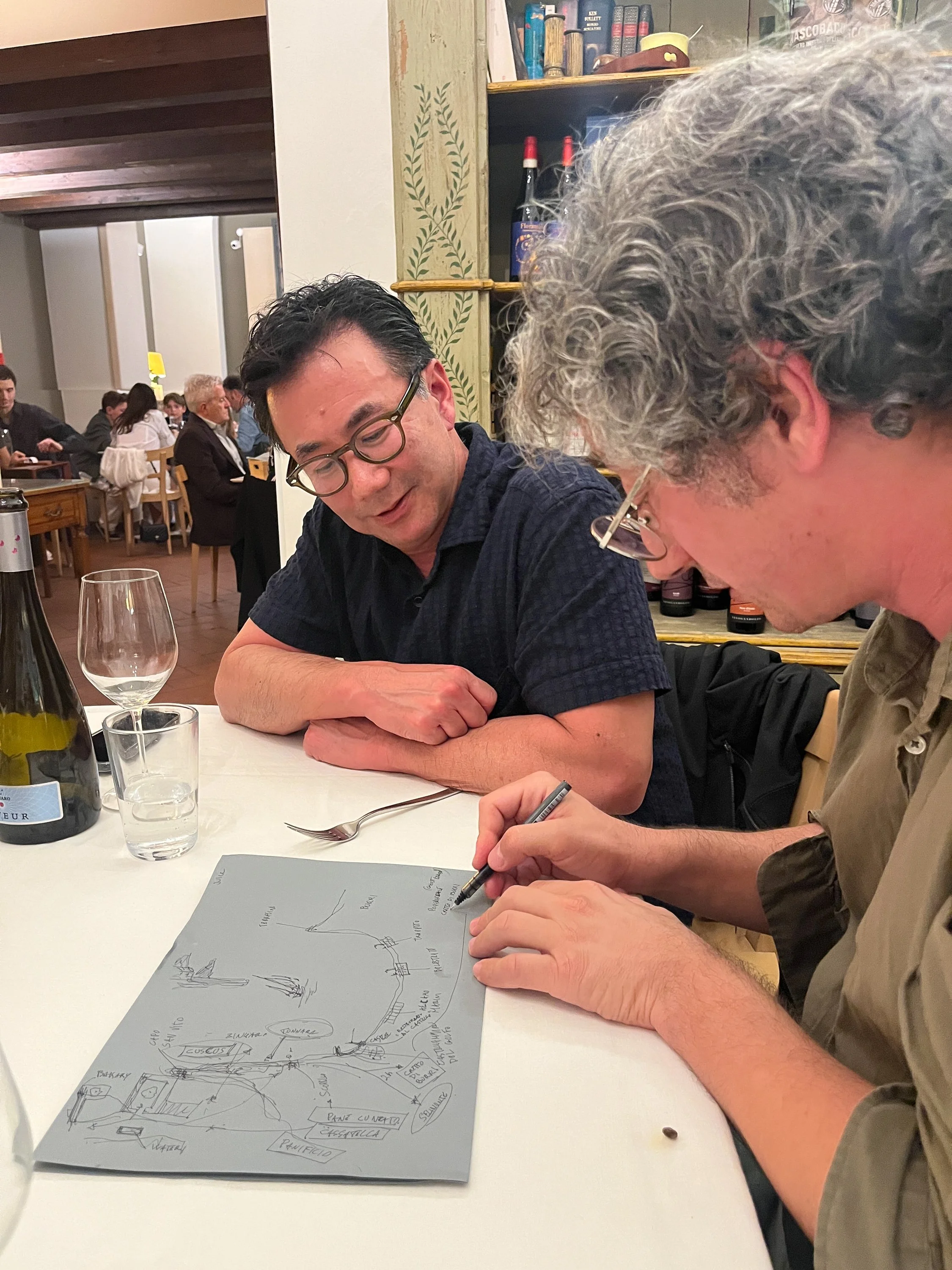
While evenings were open, the group often filled them together, exploring the city’s wine bars, pizzerias, and jazz bars.
Extracurriculars
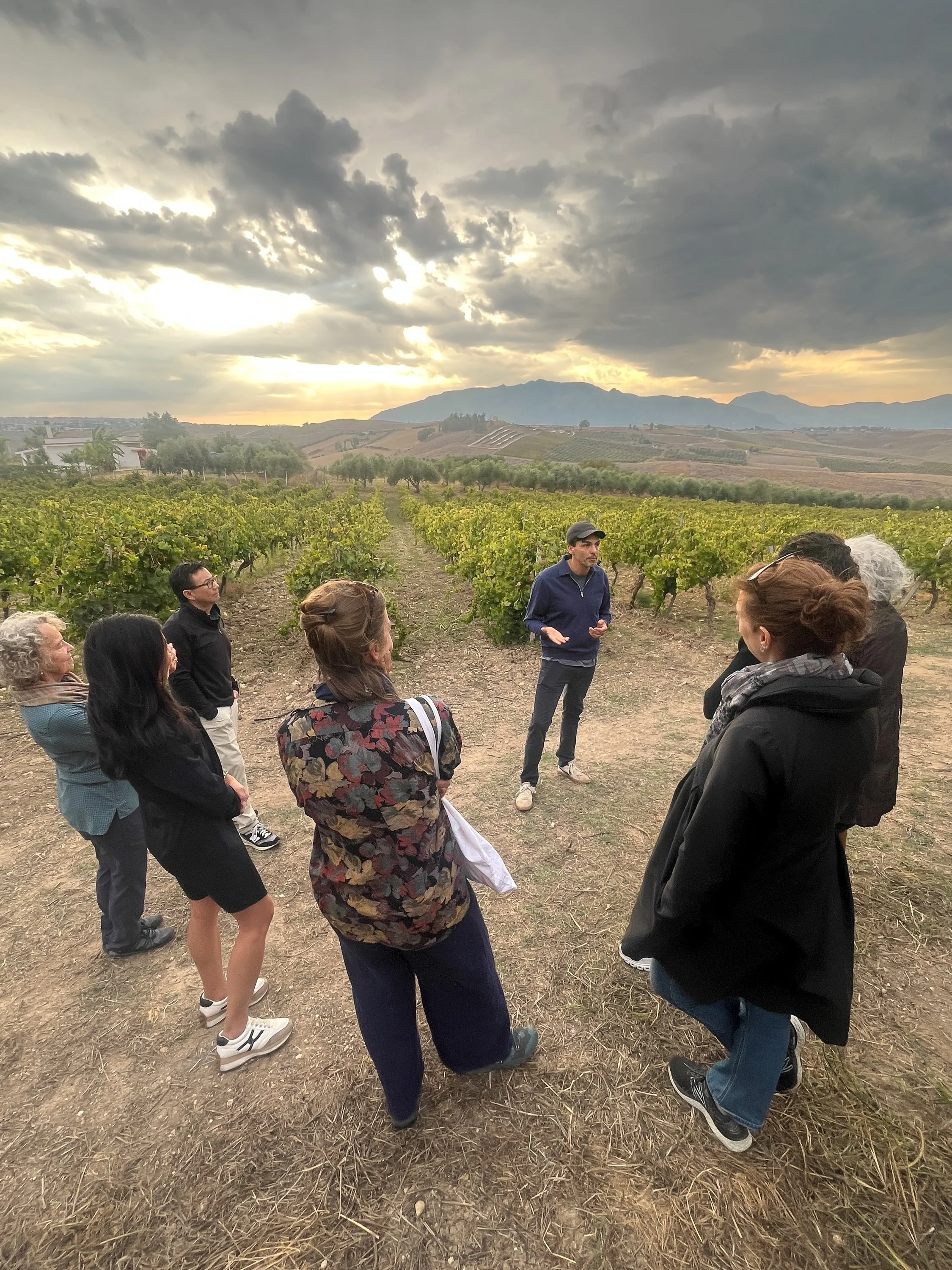
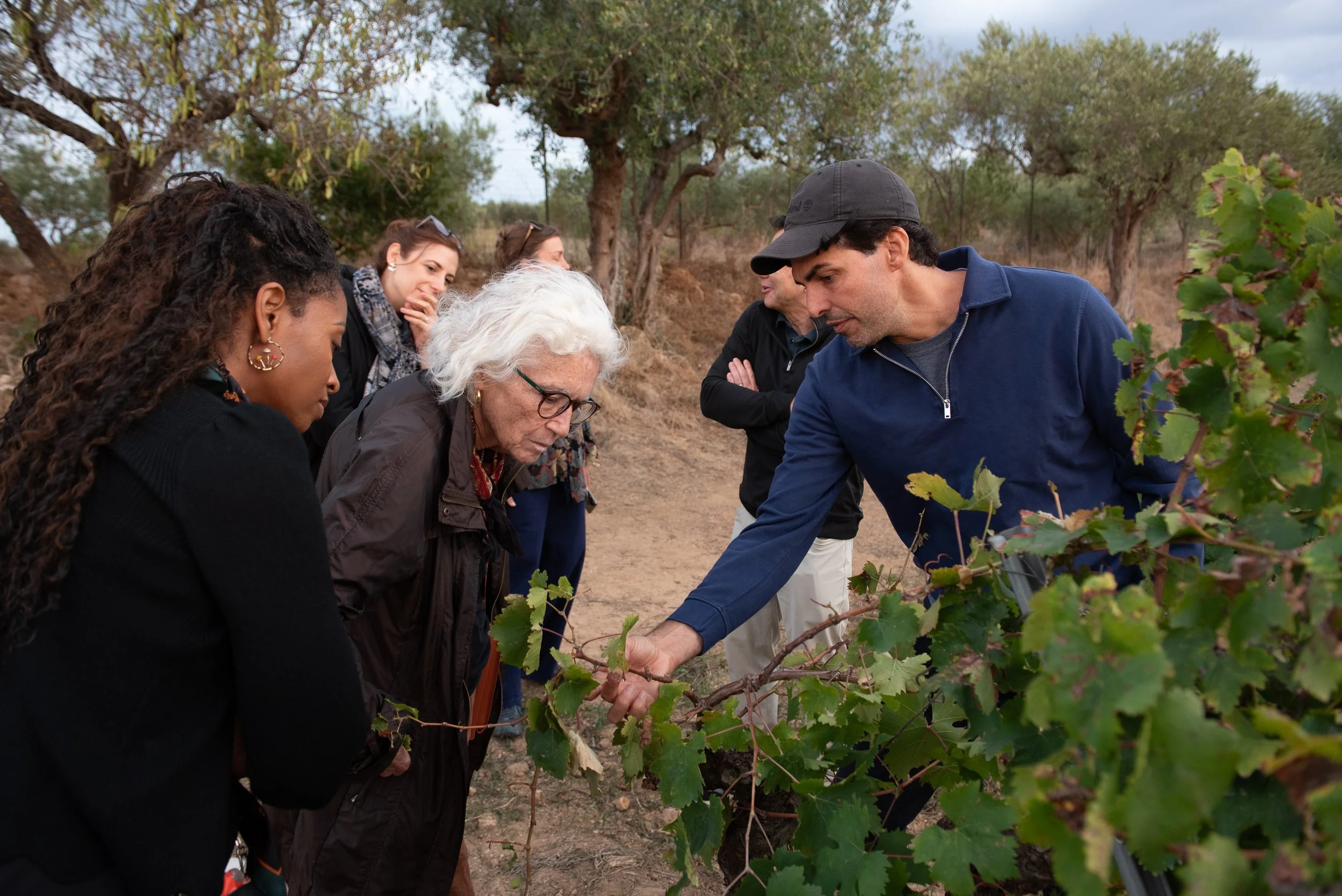
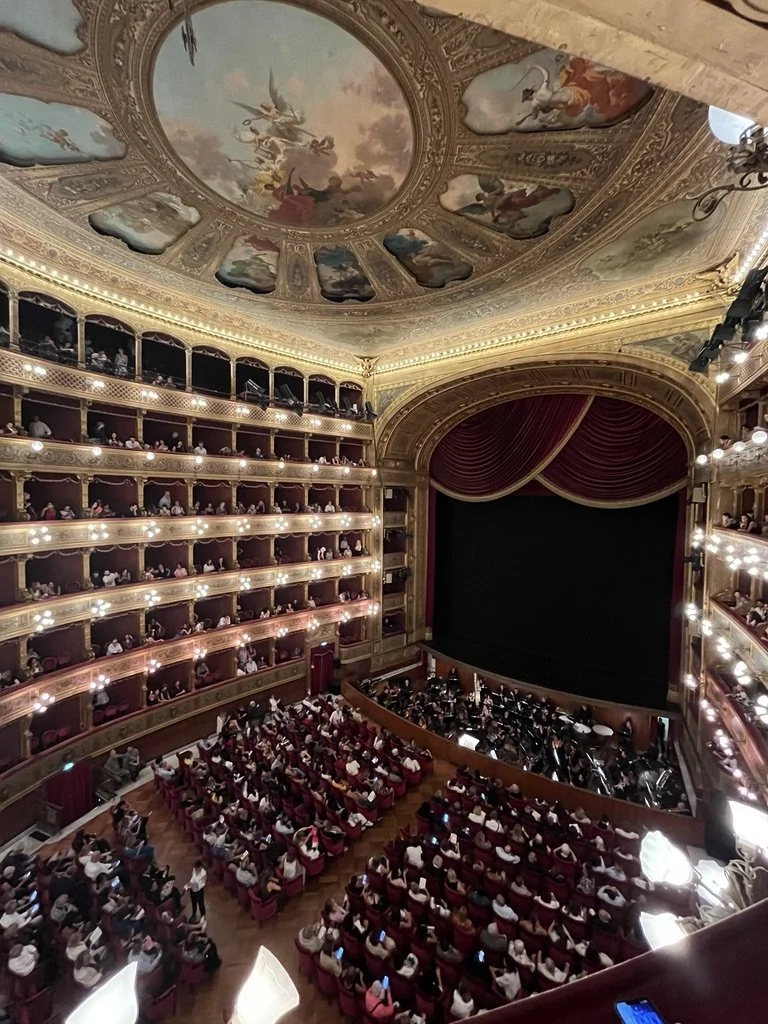
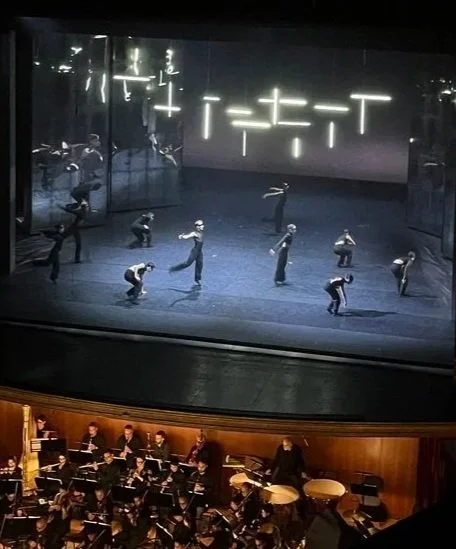
Two optional extracurriculars rounded out the week: a tasting at a family-run vineyard in the hills west of Palermo, and an evening of ballet at the celebrated Teatro Massimo.
More highlights from the week in Palermo
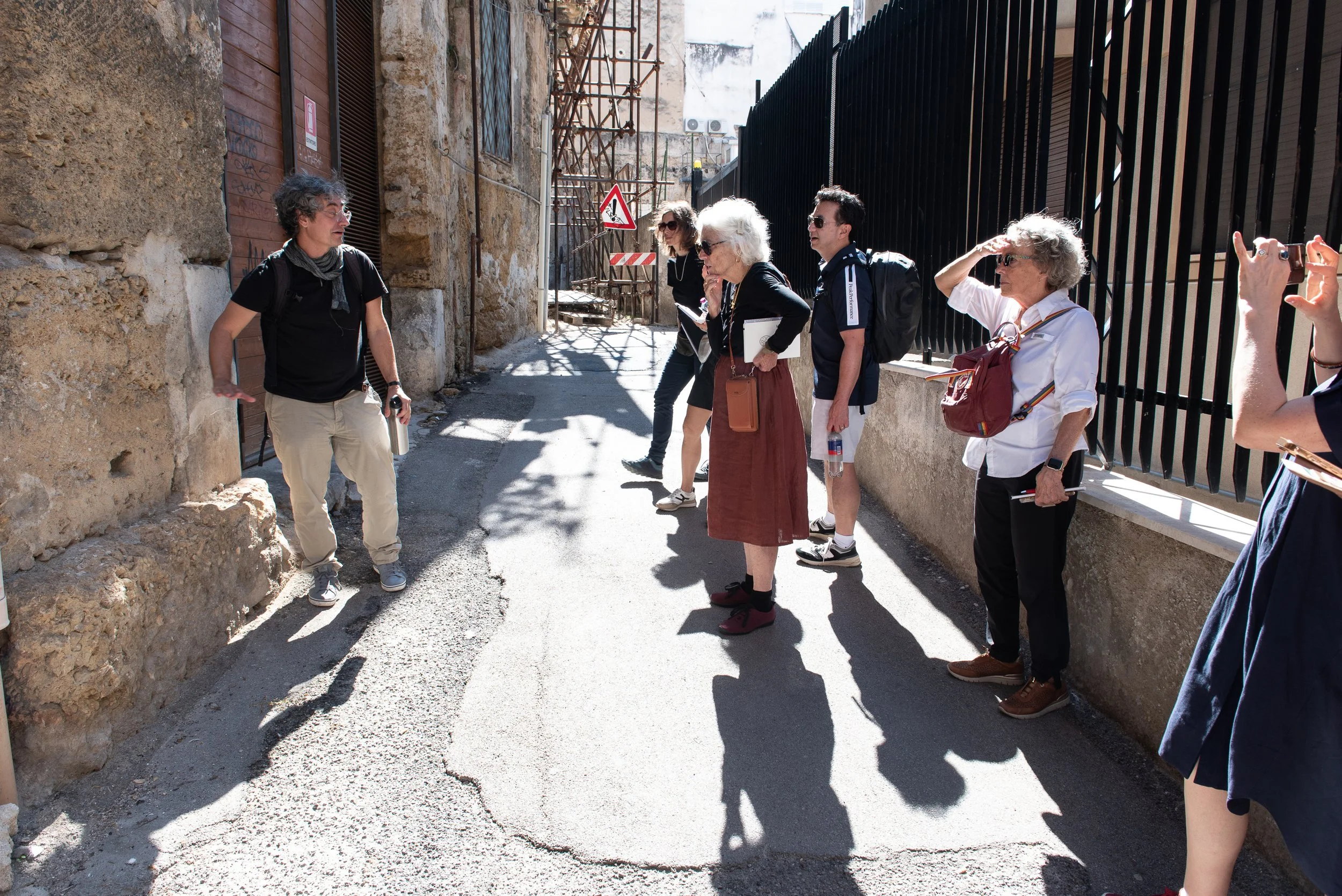
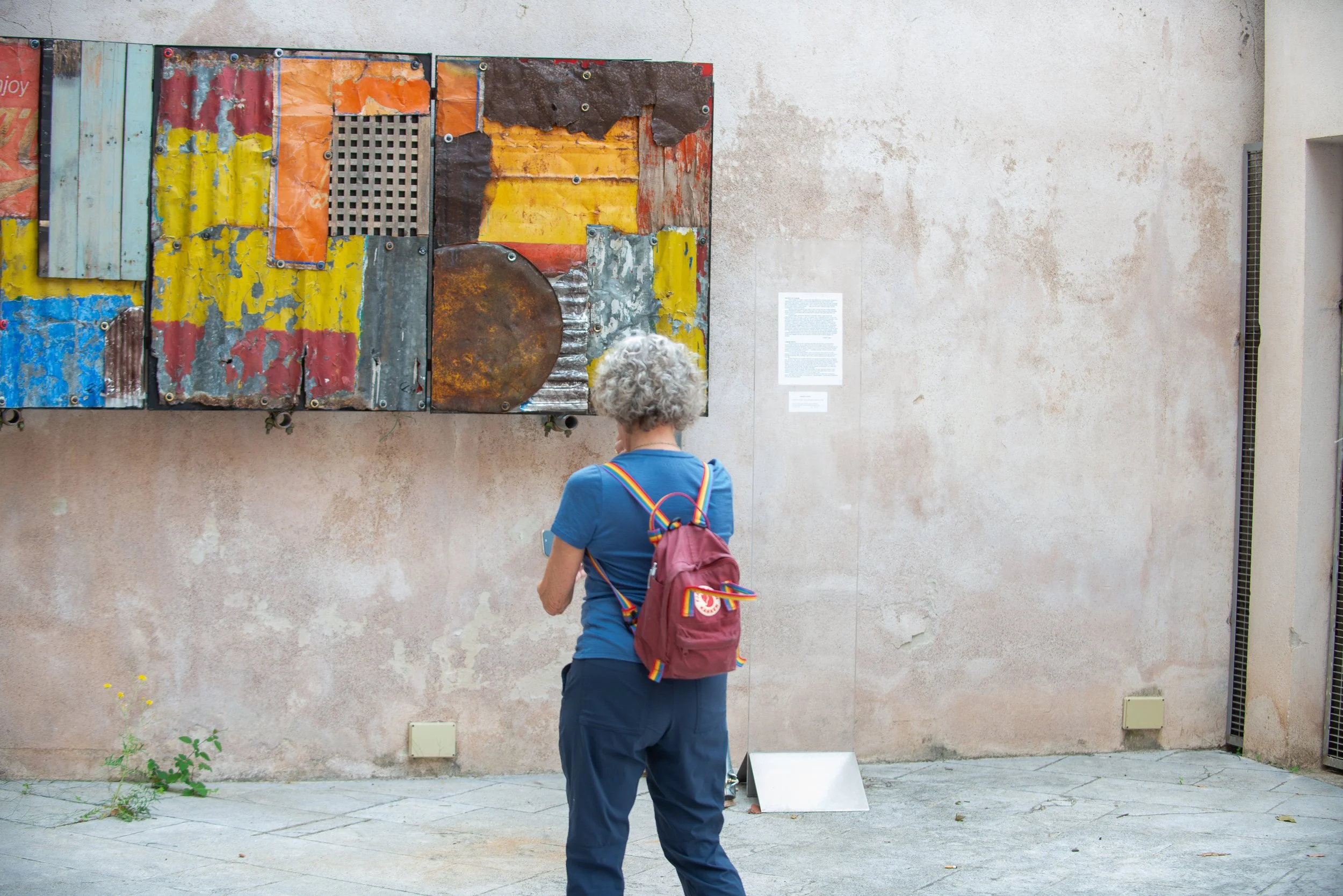
On practically every street corner, one can find evidence of past eras