
Meet the Instructor: The Architecture & Cuisine of Andalusia
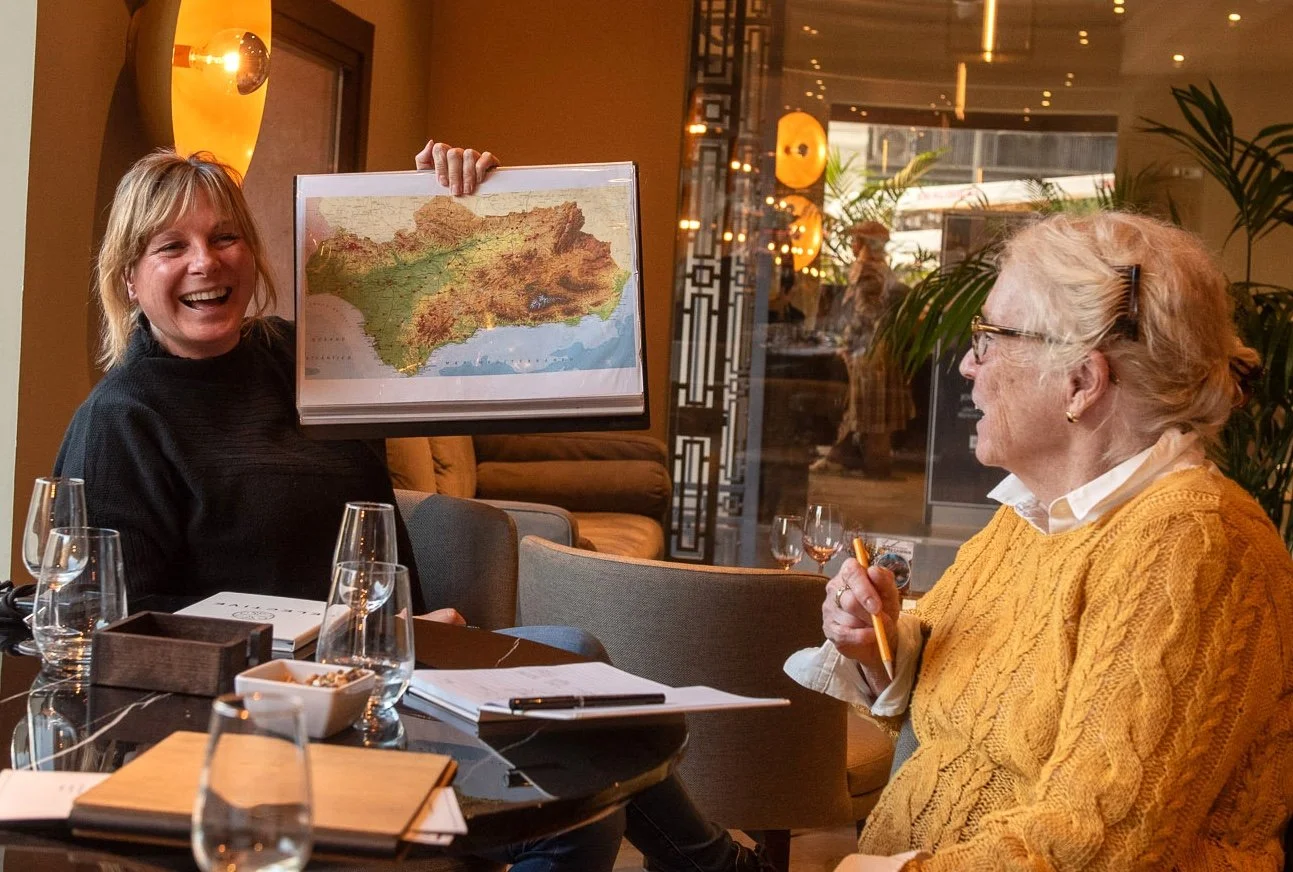
Blanca Espigares Rooney is a Granada-born architect specializing in heritage and urban studies, whose family connection to the Alhambra goes back generations. In this conversation, she shares what it means to teach a place she has known her entire life, and how her unique perspective contextualizes what Elective students learn about this region of Spain through the study of its architecture and cuisine.
Q: You were born in Granada, and your family's connection to the Alhambra goes back generations. How does that personal history shape the way you teach this course?
A: Most people don't realize that the Alhambra has always been more than a monument — for centuries it functioned as a small city in its own right, with its own governor, its own residents, its own daily life. Today only about 3 families still live within its walls. Mine is one of them.
Growing up there gives you a relationship with the place that is hard to describe. I saw it as my home long before I saw it through the lens of an architect or a scholar. When I later studied its history formally and worked on its restoration, I was building knowledge onto something I already cared deeply about. There is a particular kind of pride in being the person who gets to teach others about the place you grew up — to share what it has meant to your own family across generations while at the same time helping them to understand its significance as a world landmark.
Q: The course title frames this as a study of architecture and cuisine — two things that might seem unrelated. What connects them, and why does that pairing matter for understanding the history and culture of Andalusia?
A: In Andalusia, both the architecture and the cuisine bear the imprint of the same centuries of cultural exchange — Arab, Jewish, Christian, Roman, Berber, and influences that reach even further east, from North Africa into Syria and the Arabian Peninsula. The architecture and the food evolved in parallel, shaped by the same population movements, trade routes, and historical upheavals.
What I find valuable about studying them together is that in both, you can trace where those different influences overlap and complement each other. You learn to recognize an ingredient the way you learn to recognize an architectural element — as something with a history and a point of origin. Together, they give you more than one way into the same story, and a more complete picture of what this region has been and still is.
Q: You start the course with conversation about destroying the myths of “Moorish Spain.” What are the most persistent myths about this period and place — and why does it matter to address them before students see anything else?
A: There are two myths that tend to get in the way. The first is the idea that medieval Andalusia was a continuous, harmonious coexistence of Muslims, Jews, and Christians — a paradise of tolerance that was simply and tragically destroyed. It contains real truth, but it flattens seven centuries of complex, often violent political history into a romantic image.
The opposite myth is equally misleading: that the “Moorish” period (a term that itself deserved scrutiny!) was a foreign imposition on an essentially Christian Spain, something to be overcome rather than understood as foundational to what the region became. This view has shaped how the history is taught and how the monuments have been presented to visitors for generations.
Both get in the way of actually seeing what is in front of you. So we begin the first day not just by stating what is true and what isn't, but by examining where these ideas came from, why they were perpetuated, and who had an interest in perpetuating them. That kind of historiographical inquiry is at the heart of what this course does. And then, as students explore Córdoba and Granada, the cities themselves begin to tell a more nuanced story.
Q: Your PhD research focused on urban cartography — the way cities have been mapped and understood over time. How does that lens change the way you walk through Córdoba or Granada with students?
A: As we explore these cities, we look at maps of what they looked like at different points in history — and what you see is cities built in layers on top of each other. A Roman city under an Arab city under a Christian city…. Each era left its mark, while also redefining how earlier layers are seen.
That historical perspective changes how you walk through a place. Why does this street bend here? What was on this site before this building? The city itself is an archive, and maps are one way of learning to read it.
What students often find surprising is how much of the earlier versions of the city are still present — not only in the monuments but in the street plan itself. Once you know what to look for, you begin to see it everywhere.
Q: The Alhambra draws millions of visitors a year. What does seeing it as part of a broader course focused specifically on architecture give students that a typical visit cannot?
A: There is nothing wrong with visiting the Alhambra and simply being moved by it — it is one of the most extraordinary places in the world, and that experience has its own value. But this course gives students the context and the tools to get far more out of it. They spend the week making connections — between the two cities, between the different styles of architecture they study, between the different eras and cultures that intersect in these places, between the course material and their own moments of exploration. Their visit to the Alhambra brings all of that together — the week's learning, reflection, and discussion with the cohort — in a way that is both intellectual and emotional, and that reframes everything they thought they knew about “Moorish” Spain.
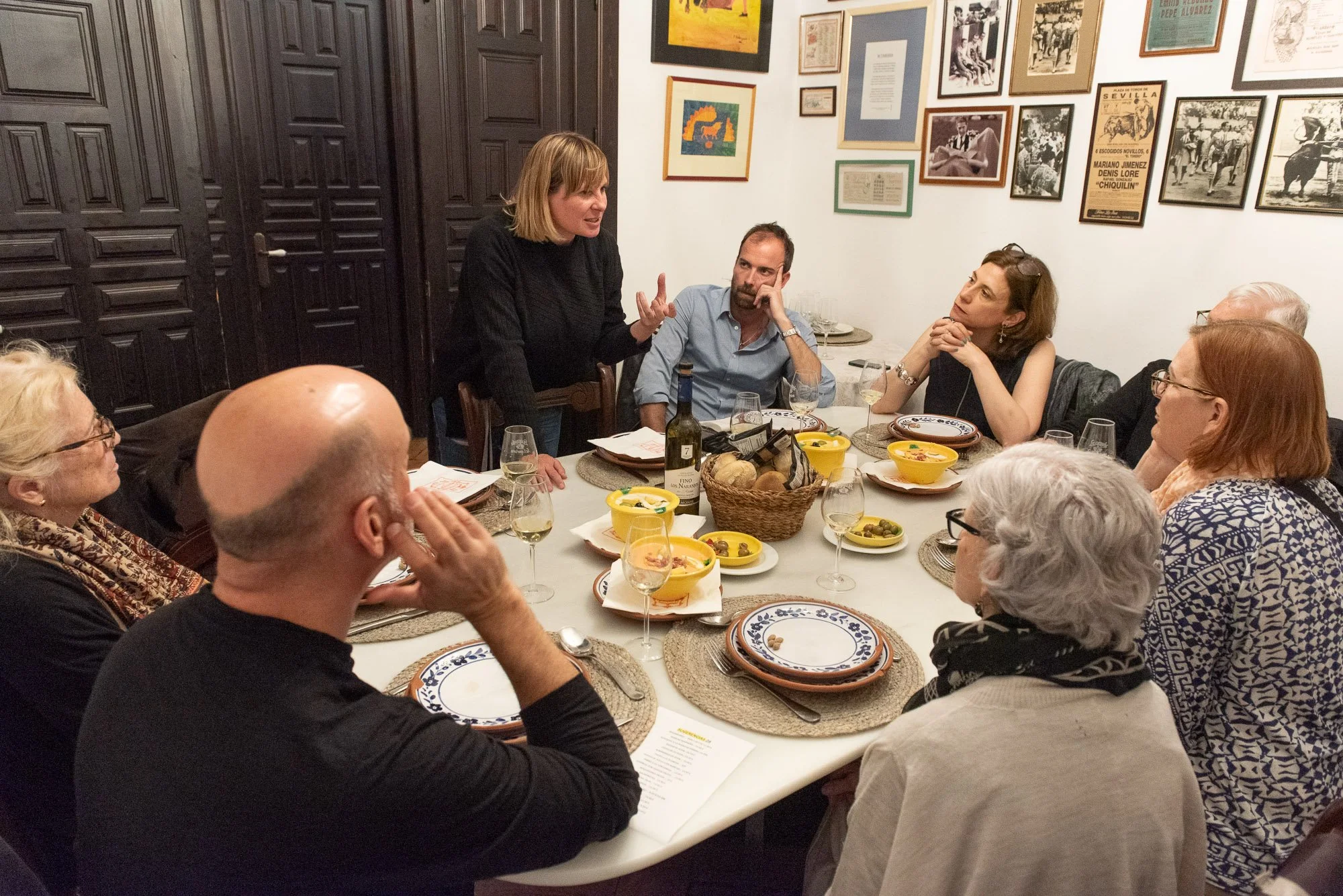
Blanca explaining the different types of gazpacho during the course’s historical tapas tasting.