Meet the Instructor: Women in Paris
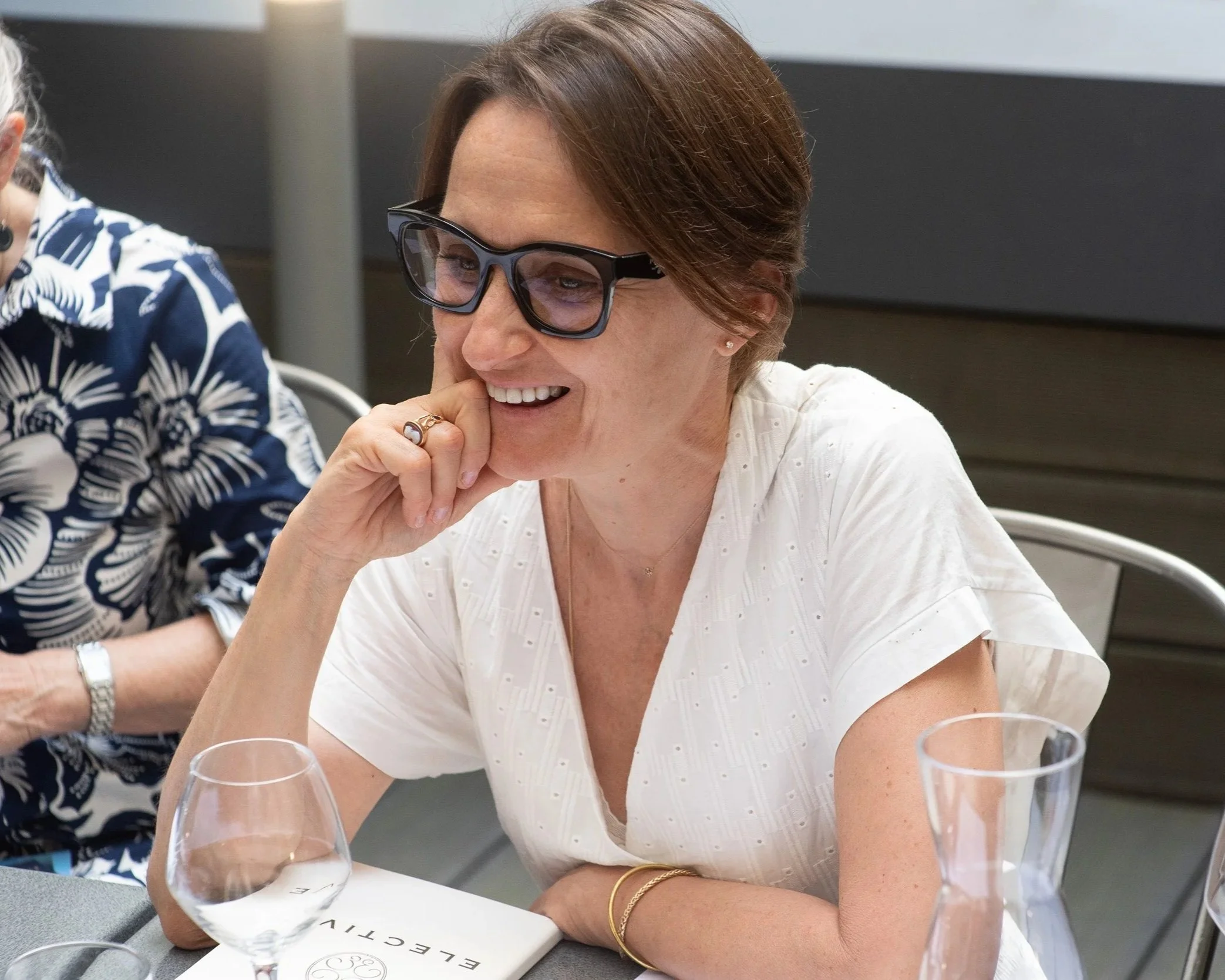
Cécile Balavoine is a novelist, professor, and former travel writer deeply immersed in Paris’s literary, artistic, and musical life. We asked her to reflect on how women shape the way she reads and understands the city, and how that lens transforms the experience of Paris itself.
Read on to learn more about Cécile, her connection to Paris, and what makes this Elective special.
Q: As a writer and a professor, how does the question of women in Paris connect with your work?
A: Paris presents itself as a city of great men. Its institutions, monuments, and official narratives often foreground singular male figures — writers, philosophers, statesmen — whose names structure the story of the city.
As a novelist, I am attentive to voices: who speaks, who is remembered, and who is relegated to the margins. That sensitivity inevitably shapes how I read Paris. Beneath the grand narrative of “great men,” there is a far more intricate network of women — writers, patrons, artists, entrepreneurs — whose presence has shaped the city’s intellectual and cultural life in profound ways.
My work, whether in fiction, articles, or in the classroom, often involves listening for those quieter currents. The question of women in Paris is not separate from my work; it is part of how I understand a narrative itself.
Q: What do even thoughtful, well-traveled visitors tend to overlook about Paris when it comes to the women who shaped it?
A: The Panthéon offers a striking example. The inscription on its façade reads “Aux grands hommes, la patrie reconnaissante” — “To its great men, the nation gives thanks.” The language itself frames national memory in masculine terms. And it is only very recently that women have been admitted there: Marie Curie, Josephine Baker, Simone Veil... Their presence feels both monumental and long overdue.
At the Luxembourg Gardens, you encounter another layer: the statues of queens that line the park. They are there, visible, yet easily overlooked unless you know to search for them. They do not dominate the narrative in the same way; they require attention.
This is often the pattern in Paris. Women were not merely muses or companions to male artists; they were political actors, intellectual forces, patrons, and creators. But their contributions are often embedded rather than highlighted. Once you become aware of that dynamic, the city’s surface coherence begins to shift.
Q: One of the distinctive aspects of this course is that students encounter women actively shaping Paris today. What do you hope students understand about contemporary Paris through those conversations?
A: What excites me is that women today are at the forefront of many domains in Paris — literature, visual art, music, design, gastronomy — in ways that would have been far less visible not so long ago. Think, for example, of how recently the culinary world was dominated almost entirely by male chefs. That landscape has changed dramatically.
When students on this course visit a contemporary artist’s studio, speak with a writer, meet a designer or restaurateur, they see how women are not simply participating in the city’s cultural life but leading it. They are shaping aesthetic directions, redefining institutions, creating new spaces.
Through those encounters, I hope students understand that Paris is not frozen in its nineteenth-century mythology. It is a living city whose cultural authority is continually being redefined — and women are central to that transformation.
Q: What shifts in someone’s experience of Paris once they begin looking at the city through this lens?
A: When you look at Paris through the lens of women, you begin to see the city’s official narrative as partial. The Panthéon becomes not only a monument but a site of debate about who is included in national memory. The Opéra-Comique is no longer simply a historic performance venue; it carries the imprint of the female performers and iconic heroines who shaped its repertoire and cultural identity. A contemporary artist’s studio or jewelry atelier reveals how creative authority is exercised in intimate, material ways.
This lens brings you closer to the lived reality of the city. Instead of experiencing the Paris of guidebooks — a sequence of masterpieces and monuments — you begin to perceive networks of influence, collaboration, and reinvention. The city feels less monumental and more human, less fixed and more alive.
Q: What do you most look forward to discovering — or rediscovering — when you spend a week in Paris with a small group studying this theme?
A: First, the conversations. Students bring their own histories, readings, and experiences. They notice details I might not, or draw connections that reframe a place I thought I knew well. That exchange is invaluable.
Second, I look forward to seeing the city through their eyes. Paris shifts depending on who is looking at it. A question raised during breakfast can transform the way we walk through a neighborhood later that morning. A remark made in front of a statue or inside a studio can alter the way we understand the space.
That shared act of looking — and looking again — is what keeps Paris from ever becoming static. It remains open, dynamic, and surprising.